
Reviewed · GUIDED
Plain of jars tour with local guide
The most striking part of this Phonsavan day is the sheer variety packed around the Plain of Jars. You see three archaeological sites, walk through a rice field, visit a village that turns bomb casings into spoons, and finish among the ruins of an old capital damaged during the Vietnam War.
I like two things in particular. First, private transport keeps the day flexible and removes the need to puzzle over rural roads. Second, the guide adds human context, from rice farming around Site 3 to the local trade in aluminum spoons. Guides named Mr Lar and Su have been praised for clear explanations and attentive care.
The main drawback is the pace. Eight hours covers a lot of ground, and the schedule runs from 8:30 a.m. to roughly 4:10 p.m. Lunch is included, but soft drinks are not, and the fixed, non-refundable booking policy gives you little room if your plans change.
Key points at a glance
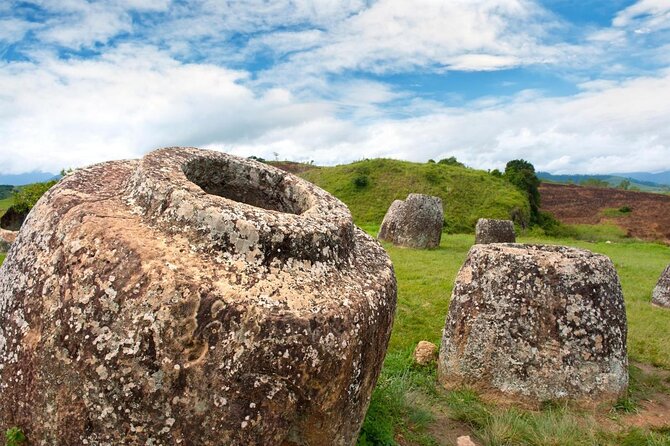
- Three jar sites in one day: Visit Sites 3, 2, and 1, each with a different setting and feel.
- Ban Naphia’s bomb-metal spoons: See how more than 30 families make and sell aluminum spoons for local and tourist markets.
- A private vehicle and guide: Your group travels alone with private transportation, an English-speaking driver-guide, and hotel pickup and drop-off.
- Muang Khoun’s wartime remains: See That Foun and Wat Phia Wat in the former capital of Xieng Khouang.
- Lunch and entrance fees included: The $146 price covers private transport, the guide, tax, admission fees, and lunch.
- A full rural day: Expect about eight hours, including walking across a rice field and moving between sites outside Phonsavan.
Why the Plain of Jars needs a full day
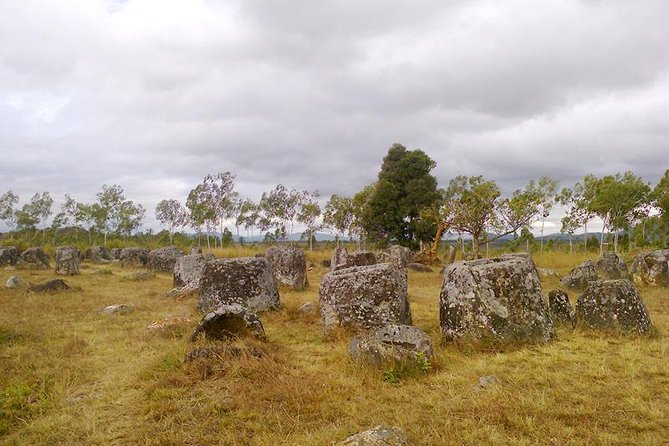
The Plain of Jars is not one single stop with a few stones beside the road. It is a spread of archaeological sites around Xieng Khouang, and the three locations on this tour show different sides of the area.
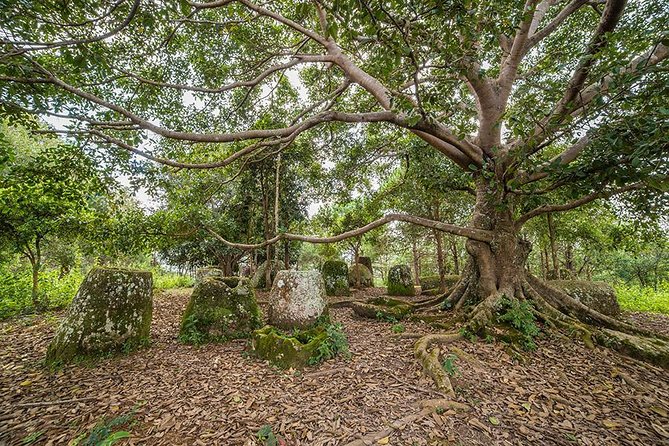
At the jar sites, you see large stone vessels scattered across open ground. Some are enormous, with estimated weights above six tons. Others sit beneath or beside trees, making Site 2 especially appealing if you like photographs with a sense of place rather than a simple row of monuments.
The purpose and origins of the jars are still presented through different stories and interpretations. That gives your guide an important job. A good explanation helps you look beyond the size of the stones and consider why these objects were placed here, how they relate to the surrounding countryside, and what daily life in the region has meant over time.
The private format matters. Your own group takes the vehicle, so you are not joining a large coach with a fixed crowd. You still follow a fairly tight schedule, but you have a better chance to ask questions and spend a little time looking around on your own.
More Plain of Jars trips from Laos
- Plain of jars share group tour
★ 5.0 · 4 reviews - 3 Days The Plain of Jars and Xieng Khouan (Depart from Luang Prabang)
★ 5.0 · 3 reviews - Plain of jars private tour
★ 5.0 · 3 reviews
8:30 a.m. to Ban Naphia’s spoon workshop
Your guide and driver meet you at your hotel at 8:30 a.m. The drive to Ban Naphia in Phaxay district takes about 30 minutes. This first stop introduces a living village economy before you reach the ancient jars.
More than 30 families live in Ban Naphia, and many earn money by making aluminum spoons from bomb casings. These objects are linked to the bombing that affected Xieng Khouang during the Vietnam War, but here the metal has been put to practical use in local and tourist trade.
That contrast gives the visit its value. You are not only looking at a finished souvenir. You are seeing how a community makes an income from a difficult part of its past. The tour description also refers to local market trade, so this is connected to ordinary household commerce, not just a display arranged for visitors.
Plan on about 30 minutes here. That is enough for a short look and an explanation, but not a long workshop visit. If this stop matters to you, use your time for questions about the spoons, the material, and how the village sells its work.
The stop is listed as free of admission, and transportation is covered. The practical detail is that the village visit comes early, when you are fresh and more likely to take in the guide’s explanation before the archaeological sites fill the rest of your attention.
10:00 a.m. at Plain of Jars Site 3
Around 10:00 a.m., you reach Site 3 in Ban Xieng Di. The approach includes a ten-minute walk across a rice field. This is a small but important detail: you are not simply stepping from a vehicle onto a paved viewing area.
The walk gives you a closer sense of the countryside around the jars. Your guide can explain how the rice season affects the fields and the route. Conditions in a working rice field can vary, so sensible shoes are a good idea, even though the tour information does not set out a special footwear requirement.
You spend about 45 minutes at Site 3. That should give you time to hear the main explanation, look closely at the jars, and have some time alone with the setting. One of the strongest features of this experience is that the guide does not need to fill every minute with talk. A previous account singled out the well-paced schedule and the chance to explore independently at the jar sites.
Site 3 works well as the first archaeological stop because it eases you into the subject. You have already seen a village making spoons from bomb metal, and now you are looking at objects whose original purpose remains a matter of discussion. The two stops create a useful contrast between a known local craft and an ancient mystery.
Lunch near Lak Khao before Site 2
After Site 3, the schedule places lunch near Lak Khao before the visit to Site 2. Lunch is included in the $146 price, which is useful in a rural area where arranging your own midday meal could interrupt the day.
Soft drinks are not included, so bring money for one or plan ahead. The supplied information does not specify the restaurant, menu, or dietary choices, so you should not book this tour expecting a particular dish or special meal arrangement.
Lunch also marks the busiest section of the day. By this point you have already left Phonsavan, visited Ban Naphia, and walked to Site 3. If you like slow meals and long pauses, the schedule may feel brisk. If you want to see the area’s main sights in one day, keeping lunch within the route is efficient.
A few more trips around Laos worth a look
- Vientiane Cultural Tour with Private Guide
★ 5.0 · 80 reviews - From Luang Prabang: Guided Mountain Bike Tour with Lunch
★ 4.7 · 72 reviews - 1-Day Tour to Vang Vieng with Private Guide
★ 5.0 · 16 reviews - One Day Guided Tour: Kayaking, Zipline & Tubing In The Cave from Vang Vieng
★ 4.0 · 15 reviews
Site 2 and its tree-filled jars

At about noon, you visit Site 2 near Ban Nakho. The stop lasts around 35 minutes. This site is often appreciated for its setting, with large trees growing inside or beside some of the jars.
The jars here are described as taller and longer than those at Site 3, which gives the stop a different visual character. Site 2 is a good place to pay attention to scale. Step back and look at the objects against the trees, then move closer to notice the stone surfaces and shape.
Thirty-five minutes is enough for a guided look, but it is not generous if you want to photograph every jar from several angles. The private vehicle may help if your group is ready to move, yet the day still has two more significant stops. Listen to the main explanation first, then use the remaining time for your own pictures and observations.
I like the order here. Site 3 begins with the rice-field walk and local farming context. Site 2 follows with taller jars and mature trees. The places do not feel like identical repeats, even though the central subject is the same.
Muang Khoun at 2:00 p.m.
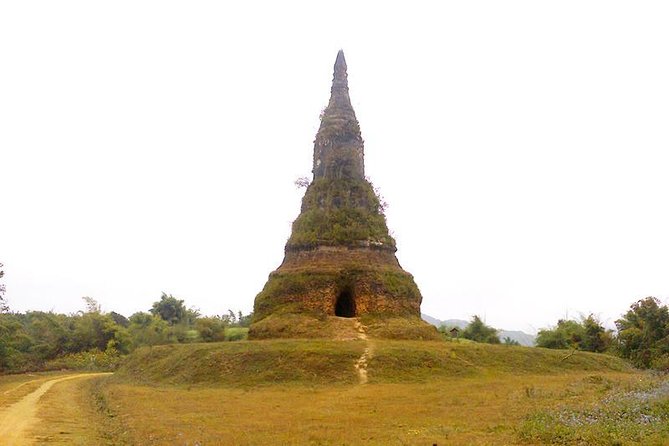
At about 2:00 p.m., the tour reaches Muang Khoun, the former capital of Xieng Khouang. The town was heavily bombed during the Vietnam War from 1964 to 1973, and the remaining religious buildings give the afternoon a more recent historical focus.
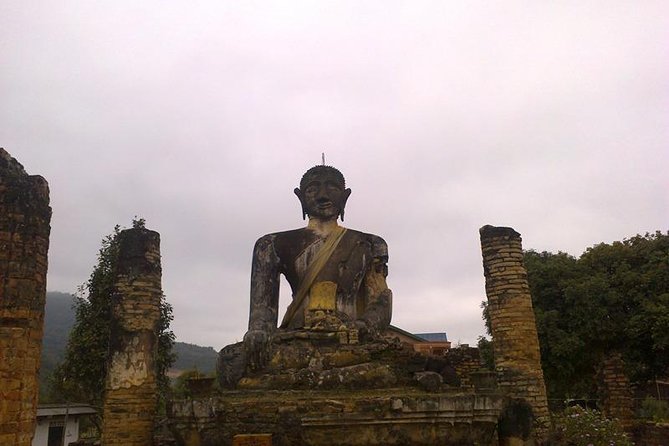
You visit That Foun and Wat Phia Wat during roughly one hour. These sites help explain that the region’s story is not limited to prehistoric or ancient remains. You are also looking at a former center of local life affected by war.
Wat Phia Wat and That Foun are included without a separate admission charge. The tour information does not claim that every structure remains intact, so expect remnants and a sense of loss rather than a fully preserved old capital.
This stop also gives the day a change of rhythm. The jar sites are open and spread out. Muang Khoun brings you to built religious remains and the memory of a city damaged within living memory. Your guide’s explanations are especially useful here because the physical remains alone may not tell you what the place once meant.
Site 1, the largest final stop
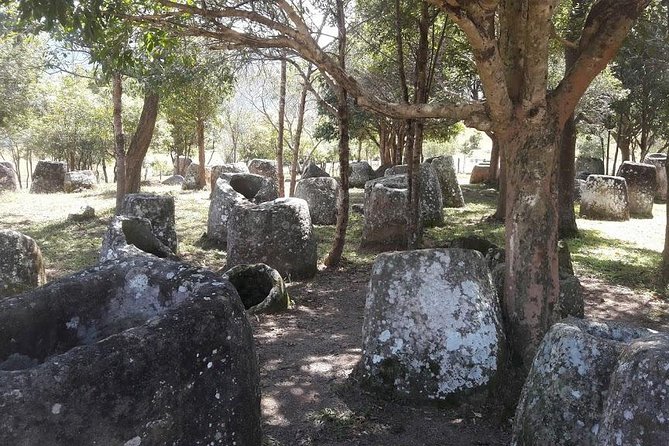
At around 3:30 p.m., you reach Site 1, the final jar site. It contains 334 jars, with an estimated weight above six tons for some of them. Transport to the final location and the return to your hotel are included.
Site 1 is the grandest numerical stop on the route. After seeing the smaller groupings at Sites 3 and 2, you can better appreciate how many vessels are gathered here. Save some energy for this final visit, since it is not just a quick photo stop. You have about 40 minutes to look around.
Ending at Site 1 makes sense. You have already learned the basic story and seen two different settings. Here, the number and scale of the jars bring the subject together. The schedule then takes you back to your accommodation, so you do not need to arrange a separate ride at the end of a long day.
The itinerary says the final stop begins at 3:30 p.m. and includes hotel drop-off. With the full route, the experience lasts about eight hours, though the exact return time depends on the drive and timing at each stop.
What $146 covers, and what it means
The price is $146 for an experience that includes private transportation, an English-speaking driver-guide, lunch, all fees and taxes, and admission charges for the included sites. Pickup and drop-off at your accommodation are also offered.
For one person, that is not a budget outing. For a private group, the value improves because the vehicle and guide serve only your party, and group discounts are available. The key question is how many people share the cost. A solo visitor pays the full listed price, while a group can spread the transport and guide cost across several people.
The price also buys convenience. You do not need to find transport to three jar sites, Ban Naphia, and Muang Khoun. You do not need to buy separate entrance tickets during the day, and lunch is already part of the plan.
I would compare this with the cost and effort of arranging a private vehicle and guide yourself. If you want all three jar sites plus Ban Naphia and Muang Khoun in one day, the package is easier to manage. If you prefer to spend half a day at one jar site, a shorter arrangement may suit you better.
Guide quality and the private format
The English-speaking driver-guide is central to the experience. The archaeological sites are visually powerful, but the value grows when someone explains the local setting, rice season, village income, and competing stories about the jars.
Mr Lar and Su are the guides specifically associated with positive accounts of this experience. Mr Lar was praised for explaining cultural meaning clearly and keeping the day well paced. Su was described as informative about the sites and their possible origins, while also looking after the group.
You should still understand that guide assignment can vary. The important point is to expect a guide who combines driving with site explanations, rather than a separate lecturer at every stop.
Private travel is helpful for a route with several rural locations. Your group does not share the activity with other participants, and hotel pickup removes a common source of morning confusion. The tour is also listed as suitable for most people and near public transportation, though the ten-minute rice-field walk means you should be comfortable walking on the route used that day.
Who will enjoy this day most
I would choose this tour if you want to see the three main jar sites without spending time arranging rural transport. It suits first-time visitors to Phonsavan who want archaeology, village life, and wartime remains in one outing.
It is also a good match if you care about context. Ban Naphia shows a present-day way of earning money, while Muang Khoun connects the region to the 1964 to 1973 war. The day gives you more than a set of photographs.
You may want a different plan if you dislike early starts, fixed schedules, or several stops in one day. The itinerary is full, and the 35-minute visit at Site 2 or 40-minute visit at Site 1 may not satisfy someone who wants long, quiet periods at each site.
The tour is private, but it is not fully custom. You follow the planned sequence and timing. That is a fair trade for covering so much ground in eight hours.
Practical points before you book
Pickup is offered from your accommodation, and the final transfer back is included. Confirmation is received at booking, and the activity is private to your group.
Bring money for soft drinks, since they are excluded. Lunch, entrance fees, taxes, private transport, and the English-speaking guide are included.
The cancellation rule deserves attention. The experience is non-refundable and cannot be changed for any reason, so book only when your Phonsavan plans are firm.
The day includes a ten-minute walk across a rice field at Site 3. Most people can participate according to the supplied information, but you should consider your own comfort with a rural walking route before paying.
Should you book the Plain of Jars tour?
Book it if you want the complete one-day picture: all three jar sites, Ban Naphia’s spoon makers, Muang Khoun, lunch, and private transport. The strongest value comes when two or more people share the $146 price, and the guide’s explanations make the ancient sites easier to understand.
Skip it if you want a slow archaeological visit or need flexible cancellation. For most visitors with one full day in Phonsavan, though, this is a well-shaped route with a useful mix of ancient remains, local work, and wartime history.
FAQ
How long does the Plain of Jars tour last?
The tour lasts approximately eight hours. The schedule begins with hotel pickup at 8:30 a.m. and includes visits through the afternoon, followed by transport back to your accommodation.
Which Plain of Jars sites are included?
The tour visits Plain of Jars Sites 3, 2, and 1. Site 3 is visited first, Site 2 follows lunch, and Site 1 is the final archaeological stop.
Is hotel pickup and drop-off included?
Yes. Pickup is offered at your accommodation, and transportation back to your hotel is included after the final visit.
Is the tour private?
Yes. Only your group participates in the activity. Private transportation is included.
Is lunch included in the price?
Yes. Lunch is included. Soft drinks are not included.
What else does the tour visit besides the jar sites?
The route includes Ban Naphia, where many families make aluminum spoons from bomb casings, and Muang Khoun, the former capital of Xieng Khouang. Muang Khoun includes visits to That Foun and Wat Phia Wat.
Can I cancel and receive a refund?
No. The experience is non-refundable and cannot be changed for any reason.
Just added in Laos
- Luang Prabang: Pottery Workshop & Wat Chomphet cycling Tour★ 4.6 · 5 reviews
- Plain of jars private tour★ 5.0 · 3 reviews
- Luang Prabang Early Morning Alms Giving and Wet Market★ 4.5 · 5 reviews
- Luang Prabang Local Market and Morning Food Tour with Drinks★ 5.0 · 6 reviews
- Luang Prabang: Countryside Mountain Bike Tour with Lunch★ 3.6 · 7 reviews
- 3 Days The Plain of Jars and Xieng Khouan (Depart from Luang Prabang)★ 5.0 · 3 reviews
- Plain of jars share group tour★ 5.0 · 4 reviews
- Luang Prabang: Nong Khiaw 3-Day Trekking & camping, Homstay★ 5.0 · 9 reviews
Guided, compared.
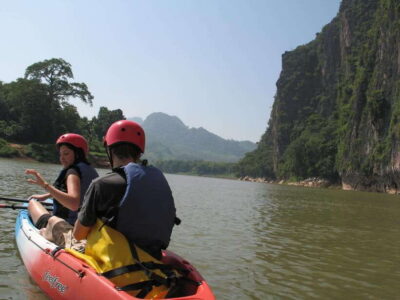

One Day Guided Tour: Kayaking, Zipline & Tubing In The Cave from Vang Vieng
Read our review →

Guided Vientiane City and Buddha Park Full-Day Tour
Read our review →Browse the lists this tour appears in