
Reviewed · LUANG PRABANG TOURS
3 Days The Plain of Jars and Xieng Khouan (Depart from Luang Prabang)
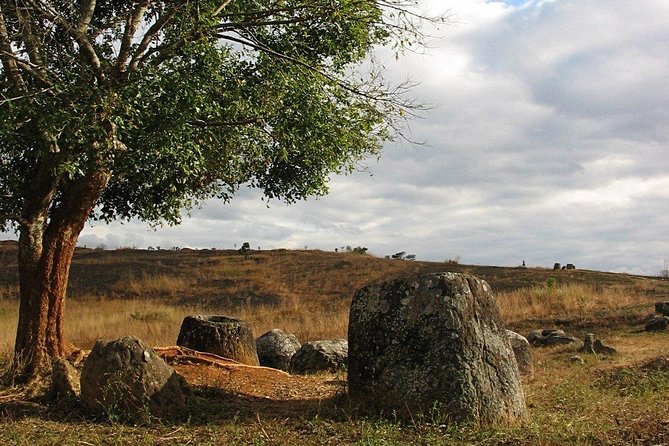
The most striking part of this trip is the change in pace and place. You leave Luang Prabang behind and spend three days following mountain roads toward Phonsavan, where ancient stone jars share the same region with bomb craters, UXO stories, rural villages, and a difficult wartime past. The Plain of Jars is not a quick photo stop here. It is the heart of a wider journey through Xieng Khouang.
I like two things in particular. First, the itinerary joins major sights with ordinary local life, including Hmong villages, a rural market, and a silk farm. Second, the private format gives your group a guide and vehicle rather than placing you in a large coach. Guides including Vone and Tin are praised for their kindness, clear English, cultural insight, and attention to detail.
The main drawback is the road time. Luang Prabang to Phonsavan is listed as about 260 kilometers, and the first day is largely a transfer with stops. Meals and accommodation are not included, so the $540 price needs to be judged as a private, guided transport and sightseeing package, not a complete holiday bundle.
Key points before you book
- A long overland route to Phonsavan: The journey from Luang Prabang takes you through Hmong and other hill-tribe villages, with a stop at Phou Khoun.
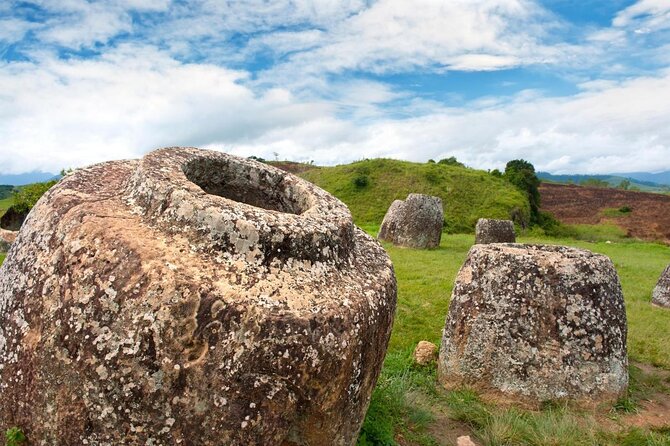
- The Plain of Jars gets a full day: You visit jar sites, the ancient capital of Muang Khoun, and the MAG UXO Visitor Information Centre.
- War history is handled directly: Tham Pha Cave, bomb remnants, and UXO education add serious context to the scenery.
- A private tour means flexibility within the schedule: Only your group participates, with an air-conditioned vehicle and a dedicated guide.
- Local crafts are part of the route: At Ban Na Pia, villagers reuse scrap metal from unexploded bombs, while Mulberries shows the silk-making process.
- Guide quality matters here: Vone and Tin are specifically praised for patience, professionalism, cultural explanation, and thoughtful care.
Why the Plain of Jars is worth the long road
The Plain of Jars is an unusual destination because its appeal is both archaeological and historical. The great stone jars are mysterious on their own, but the surrounding story is just as important. Xieng Khouang carries visible traces of the Second Indochina War, and the tour does not separate the old monuments from the modern history of the province.
You should think of this as a regional journey, not simply a day trip to see a few stone objects. The route from Luang Prabang passes through rural communities and hill country before reaching Phonsavan. That long approach helps explain why the province feels different from Luang Prabang, with its temple lanes and Mekong atmosphere.
The private setup is useful on a route like this. Your group travels together in an air-conditioned vehicle, and the tour is not shared with other parties. That does not remove the long driving time, but it gives you a more personal setting for questions and conversation.
The listed price is $540 per person. Sightseeing described in the program, vehicle costs, fees, and taxes are included. Accommodation and meals are not, although accommodation can be arranged on request. Group discounts are offered, so the value improves if several people are booking together, but you should still budget separately for your rooms and food.
More Plain of Jars trips from Luang Prabang
- Plain of jars tour with local guide
★ 4.5 · 8 reviews - Plain of jars share group tour
★ 5.0 · 4 reviews - Plain of jars private tour
★ 5.0 · 3 reviews
Day 1: Phou Khoun and the road to Phonsavan
The first day begins early, with departure listed around 7:30 am in the itinerary and 8:00 am in the meeting information. Confirm the exact pickup time with Manifa Travel before setting out. The stated meeting point is the Manifa Travel Luang Prabang office on Sakkaline Road in Vat Sene Village, opposite Villa Santi Hotel.
The destination is Phonsavan, about 260 kilometers away. This is a substantial road journey, so the first day is best suited to people who are comfortable spending much of the day in a vehicle. The stops break up the trip and give you a look at rural life beyond Luang Prabang.
At Phou Khoun, you stop for about an hour. The route includes Hmong and other hill-tribe minority villages, where you can see a part of Laos that is easy to miss if you stay only in the country’s famous towns. The villages are described as welcoming, but it is still wise to approach visits with respect. Ask before photographing people, homes, or daily activities.
The route then continues to Nong Tang and Tham Pha, also called Tham Phra or Buddha Cave. The cave contains Buddha images more than 200 years old. It also served as a hospital and shelter during the Indo-China War, which gives the stop a serious historical layer.
This is a particularly useful early stop because it introduces two themes that return throughout the trip: religious tradition and wartime survival. You are not only looking at an old cave shrine. You are seeing how the same place could serve spiritual and practical needs across different periods.
The listed stop lasts about an hour. Since exact road conditions and the final day’s arrival details are not given, keep your plans for the evening flexible. The tour is designed to get you to Phonsavan, but it is not a rushed checklist of city attractions on day one.
Day 2: Stone jars, bomb metal, and Muang Khoun
Day two is the strongest sightseeing day. After breakfast, you spend the day around the Plain of Jars and Xieng Khouang, with time for archaeology, village craft, royal history, and UXO education.
The first Plain of Jars stop is scheduled for about an hour. These large stone vessels remain the defining sight of the province, and the tour places them within the wider story of the region. The exact number of jars or the full archaeological explanation is not provided, so your guide’s interpretation will be important. This is one reason the guide can make a real difference.
The second jar stop is Site 2, also known as Hai Hin Hoo Sarat, about 20 kilometers southwest of Phonsavan. Visiting more than one site matters because the setting changes and the jars are not confined to one small display area. You get a broader sense of how these ancient remains are spread across the province.
Near Site 2, Ban Na Pia offers a direct link between war debris and present-day village life. Residents reuse metal from unexploded bombs to make spoons and other souvenirs. This is not a light craft demonstration detached from local history. The objects come from a dangerous legacy that still shapes communities in Xieng Khouang.
I find this one of the most meaningful parts of the program because it shows how villagers turn discarded war material into useful goods. If you buy something, the purchase has a clear local connection. The stop also helps you understand why UXO remains an important subject in this part of Laos.
Muang Khoun and the old Phuan capital
In the afternoon, the route goes to Wat Phiawat and the ancient capital of Muang Khoun. Muang Khoun was the 14th-century royal center of the Phuan Kingdom and later served as the capital of the French colonial province until relatively recently.
The stop adds political and religious context to a day that might otherwise focus only on jars and war remains. Wat Phiawat connects you to the older royal city, while the surrounding account of Muang Khoun shows how the area changed under different rulers and administrations.
The itinerary allows about an hour here. That is enough for an introduction, but not for an exhaustive examination of every remnant. I would listen closely to the guide and ask questions while you are on site. A guide who can explain local terms, royal history, and the effects of war will make this stop much more rewarding.
The day returns to Phonsavan around 4 pm, followed by a visit to the MAG UXO Visitor Information Centre and the official tourist information centre. MAG refers to the Mines Advisory Group, and the centre provides a place to understand unexploded ordnance and its impact.
This stop is especially important if you have seen bomb metal being reused at Ban Na Pia. The village visit gives you a personal and practical view. The UXO centre provides a broader explanation of the problem. Together, they keep the war history from becoming a vague backdrop.
The second day is also the most demanding in subject matter. You will be moving between ancient remains, religious sites, old political centers, and modern humanitarian work. That variety is a strength, but you should not expect a purely scenic day.
A few more trips around Luang Prabang worth a look
- Luang Prabang: Nong Khiaw 3-Day Trekking & camping, Homstay
★ 5.0 · 9 reviews - Luang Prabang: 3-Day Cultural Remote Trek With Homestay
★ 4.9 · 9 reviews
Day 3: A market, silk, and the final road section
The last morning begins with a short visit to a morning market. The available details do not specify the market’s size or exact products, so treat it as a brief look at local commerce rather than a major market tour.
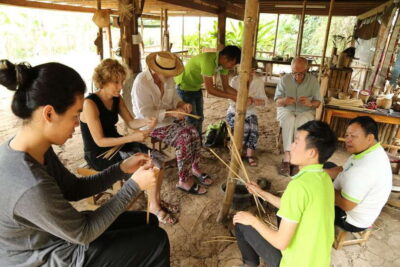
Afterward, you visit Mulberries Organic Silk Farm, a fair-trade operation where you can observe silk production from cocoons through to colorful scarves. This is a good final stop because it shifts the focus from war and archaeology to work, craft, and local enterprise.
The silk process gives you something concrete to watch. Instead of simply buying a finished textile, you can see how the material develops and how traditional skills become marketable goods. The fair-trade element also makes the stop relevant for people who care about where souvenirs come from.
The final itinerary line indicates that you then leave, but it does not give a precise route, arrival time, or end point in the supplied details. The meeting information says the activity ends in a different location, so confirm the final drop-off before booking onward transport. Do not schedule a tight connection until you know the exact end time.
What the private format really gives you
This is a private tour, meaning only your own group participates. That is valuable on a three-day route because you are not adjusting every stop to a large busload of people. You can ask about Hmong village life, the jars, Muang Khoun, or UXO without having to compete with a crowd.
The guides praised for this program include Vone and Tin. Vone is described as kind, organized, and able to keep an action-packed and sometimes challenging program moving. Tin is praised for excellent English, gentle insight, professionalism, attentiveness, and a habit of taking extra care with details.
Those qualities matter more here than a rehearsed speech. The trip covers sensitive subjects, including minority communities and the legacy of unexploded bombs. A thoughtful guide can help you understand what you are seeing without reducing it to a quick photo opportunity.
Mr. Latte is also associated with Manifa Travel and is praised for careful service on other local tours. The information does not confirm that he will lead this particular departure, so ask for your assigned guide’s name when confirming.
What the $540 price includes, and what it does not
At $540 per person, this is not a budget add-on. It includes the guided sightseeing program, an air-conditioned vehicle, all listed fees, and taxes. Since the tour is private, the price covers a more personal arrangement than a standard shared excursion.
The strongest value comes if you want the full route from Luang Prabang and prefer not to arrange separate transport, guides, and site visits. The tour also joins several types of experience that would be difficult to organize efficiently on your own: hill villages, Tham Pha Cave, multiple jar sites, Muang Khoun, Ban Na Pia, the UXO centre, a market, and a silk farm.
The price is less attractive if you expect a fully packaged three-day holiday. You must pay for accommodation and meals separately. Accommodation is available on request, but it is not part of the stated inclusions.
Because group discounts are offered, ask how the price changes for your party size. A private vehicle and guide can make more financial sense when shared by several people. The mobile ticket and pickup option are practical conveniences, but they do not change the need to confirm the departure and final drop-off details.
Who should book this trip?
I would recommend it to you if the Plain of Jars is a priority and you want more than a quick visit. It suits people who enjoy archaeology, local culture, wartime history, rural crafts, and long overland routes.
It is also a good match if you value a private guide. The strongest praise connected with the tour centers on care, English ability, cultural explanation, and professional attention. Those qualities can help you get much more from the stops.
You should think twice if you dislike long road journeys or want every hour to be relaxed. Day one covers a major distance, and the overall program is active. The schedule also asks you to move from site to site rather than linger for a full day at one location.
The experience is open to most participants according to the available information. Still, the program is described as sometimes challenging, and the road distance is considerable. If you have mobility concerns or need special arrangements, ask Manifa Travel before paying.
Booking, timing, and cancellation details
Pickup is offered, and the stated meeting point is the Manifa Travel office on Sakkaline Road in Vat Sene Village, opposite Villa Santi Hotel in Luang Prabang. The booking information gives an 8:00 am start, while the day one schedule says 7:30 am, so confirm the correct time directly.
Confirmation is sent within 48 hours, subject to availability. The activity uses a mobile ticket, and group discounts are available.
Cancellation terms are strict close to departure. You can receive a full refund if you cancel at least six full days before the start time. Cancellation two to six full days ahead receives a 50 percent refund, while cancellation less than two full days ahead is nonrefundable. Changes are not accepted inside those same cutoffs.
Should you book the Plain of Jars tour?
Book this tour if you want the Plain of Jars to be part of a larger, carefully guided journey through Xieng Khouang. The best parts are the full day around the jar sites, the connection between Ban Na Pia and the UXO centre, and the mix of archaeology, village life, silk work, and wartime history.
The decision comes down to time, road tolerance, and budget. You are paying $540 per person before accommodation and meals, but you receive a private vehicle, a guide, and a wide-ranging program that would take planning to assemble independently. If that combination fits your priorities, this is a strong way to reach one of Laos’s most unusual and thought-provoking regions.
FAQ
How long is the tour?
The experience lasts approximately three days.
Where does the tour begin?
It begins at the Manifa Travel Luang Prabang office on Sakkaline Road, in Vat Sene Village opposite Villa Santi Hotel.
What time does the tour start?
The meeting information lists an 8:00 am start, while the day one schedule lists an early departure at 7:30 am. Confirm the exact pickup time before departure.
Is the tour private?
Yes. Only your group participates in the activity.
Are accommodation and meals included?
No. Accommodation and meals are not included. Accommodation is available upon request.
What is the cancellation policy?
A full refund is available when you cancel at least six full days before the start time. Cancellation two to six full days ahead receives a 50 percent refund. Cancellations less than two full days before the start time are nonrefundable.
Just added in Luang Prabang
- Luang Prabang Local Market and Morning Food Tour with Drinks★ 5.0 · 6 reviews
- Luang Prabang Early Morning Alms Giving and Wet Market★ 4.5 · 5 reviews
- Luang Prabang: Countryside Mountain Bike Tour with Lunch★ 3.6 · 7 reviews
- Day Trek to Kuangsi Waterfall and Bear Sanctuary – Luang Prabang full day tour★ 5.0 · 9 reviews
- Luang Prabang Mekong Sunset Cruise and Hot Pot Dinner★ 5.0 · 9 reviews
- Luang Prabang: Nong Khiaw 3-Day Trekking & camping, Homstay★ 5.0 · 9 reviews
- Luang Prabang: Weaving Workshop Half-Day Experience★ 5.0 · 9 reviews
- Laos Railway: Train Tickets Easily – Skip the Lines – No worries★ 5.0 · 9 reviews
Luang Prabang Tours, compared.
Half Day Mekong Cruise to Pak Ou Caves (Morning / Afternoon)
Read our review →
Browse the lists this tour appears in