
Reviewed · LUANG PRABANG TOURS
Luang Prabang: Almsgiving Ceremony Offering
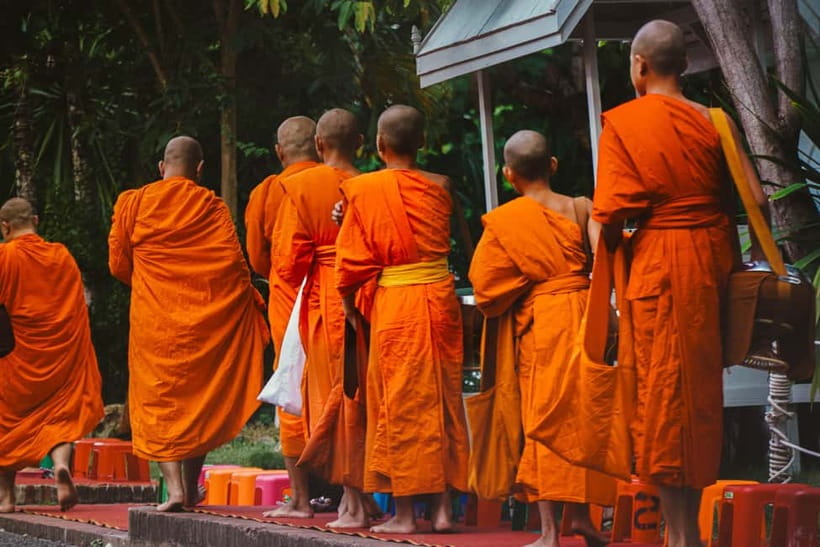
Luang Prabang’s Tak Bat ceremony is a quiet morning ritual, not a staged show. Saffron-robed monks walk silently through the streets while local people place food into their alms bowls. You can take part with a prepared offering set, then visit a nearby temple to put the ceremony into context.
I like two things here: the traditional food set saves you the trouble of finding sticky rice before sunrise, and the local-style scarf helps you dress appropriately for the ritual. I also like the chance to learn from Johnny, who is described as having spent 10 years as a monk.
The main caution is reliability at the meeting point. Two people reported being unable to find the guide or receiving no contact, so you should confirm the exact location and guide details before setting out. No transfer is included, and the ceremony calls for quiet, modest behavior.
Key points to know before sunrise
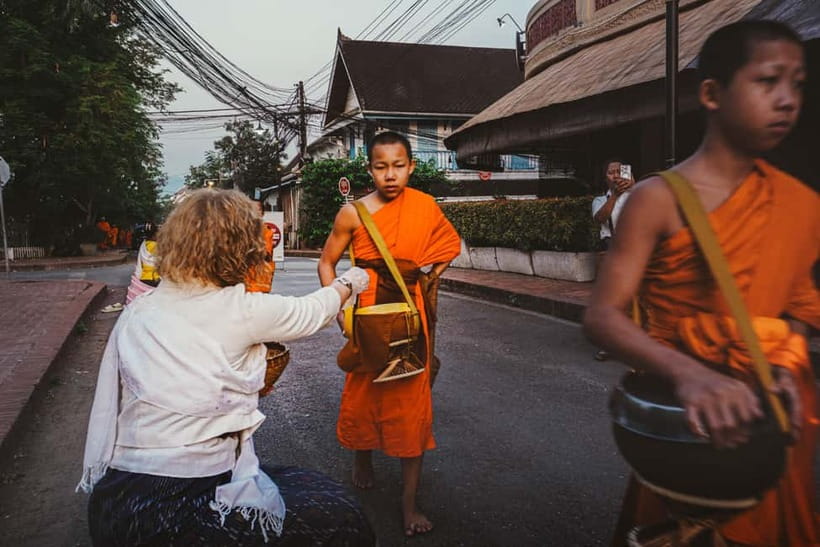
- Tak Bat happens in the early morning: You join a daily Buddhist practice as monks collect food in silence.
- Your offering is supplied: The set includes sticky rice, banana, and snacks, making participation simple.
- Johnny may lead the experience: He is described as a former monk who can explain Buddhism and monastic traditions.
- The meeting information needs attention: The starting details name L’Elephant, while one experience was arranged near Wat Nong temple.
- The temple visit adds useful context: You see more than the street ceremony and gain a clearer view of Buddhist practice.
- Respect matters more than photographs: Cover your shoulders and knees, avoid flash, and never touch a monk or an alms bowl.
What Tak Bat means in Luang Prabang
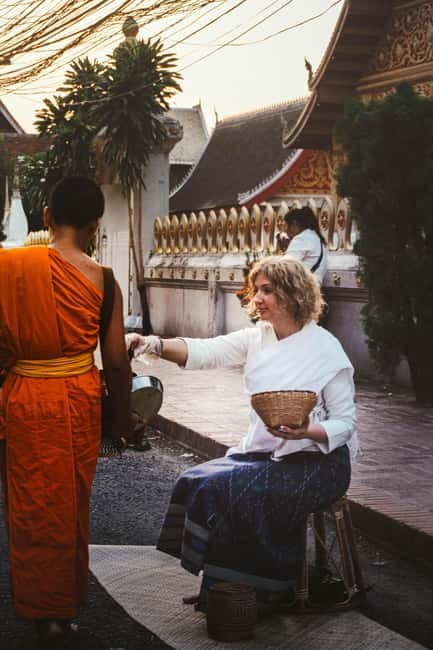
Tak Bat is the Lao name commonly used for the morning almsgiving ceremony. Monks walk through the streets while residents offer food, often sticky rice, into their bowls. The monks do not stop for conversation, and the ritual has a calm, serious rhythm.
That quiet is important. You are not watching a performance created for visitors. The ceremony is part of the daily religious life of Luang Prabang, and your behavior should reflect that. Speak softly, keep a respectful distance, and follow the guide’s instructions rather than treating the street like a photo set.
The setting adds to the experience. Luang Prabang is a UNESCO-listed town, and early morning light gives the old streets a gentle, peaceful feel. The schedule includes sunrise views, though the exact sightlines and weather will vary. I would treat the sunrise as a pleasant extra, not the main reason to book.
A few more trips around Luang Prabang worth a look
- Luang Prabang: Cruise to Pak Ou Caves & Kuang Si Waterfalls
★ 5.0 · 1,769 reviews - Luang Prabang: Cruise to Pak Ou Caves & Kuang Si Waterfalls
★ 4.8 · 1,360 reviews - Half Day Mekong Cruise to Pak Ou Caves (Morning / Afternoon)
★ 4.6 · 290 reviews
Starting near L’Elephant and finding the meeting point
The stated starting location is L’Elephant. Another meeting detail identifies Wat Nong temple, on a quiet side road away from the main crowd. That quieter setting can make the ceremony feel more private and less hectic, but the difference between these points deserves attention.
You should check the final meeting instructions before leaving your accommodation. This is especially important because two low-rated experiences involved the guide not appearing or the participant being unable to locate the group. Those reports are a small part of the overall feedback, but they point to a real practical issue.
No transfer to the ceremony spot is included. You need to make your own way to the meeting point, and the experience lasts about one hour. Since the activity begins early, allow enough time to reach the location without rushing. Arriving late could mean missing the main line of monks.
The activity is listed as wheelchair accessible. Still, the exact route and street conditions are not described, so you may want to confirm the meeting point and access needs in advance.
Receiving the offering set and dressing correctly
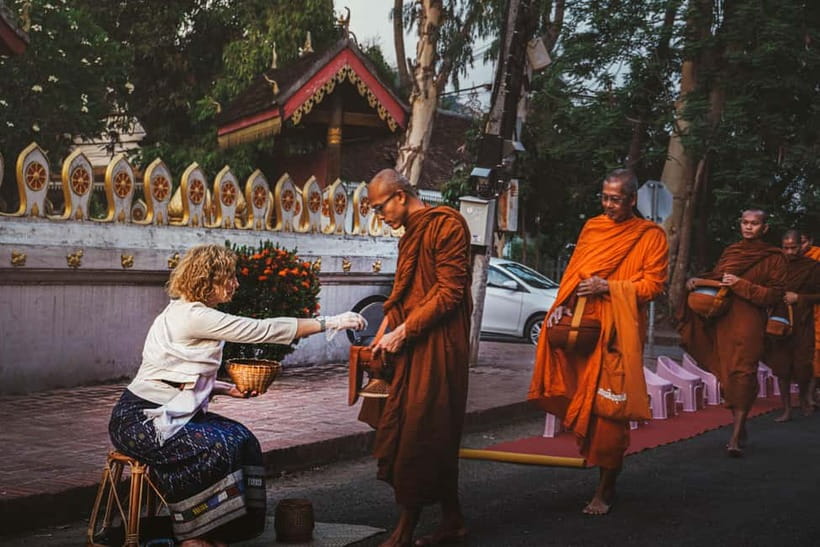
The supplied offering set includes sticky rice, banana, and snacks. This is useful because you can take part without shopping before dawn or guessing what is suitable. The food is meant for the alms offering, so handle it carefully and follow the local instructions.
A Lao-style scarf is also provided to wear during the ceremony. You should still dress modestly, with your shoulders and knees covered. The scarf is not a substitute for appropriate clothing, and you should bring your own scarf if you prefer a particular style or need extra coverage.
Your camera is welcome, but flash photography is not allowed. Dawn light may be low, so you might need to accept softer photographs rather than using a flash. The best pictures will come from staying still, keeping quiet, and letting the ceremony unfold without crowding the monks.
Never touch a monk or an alms bowl. Keep your movements measured, and avoid turning the offering into a posed photo session. The guide can show you how to sit or stand and when to place food in the bowl.
Joining the silent line of monks
The central part of the hour is watching and participating in the almsgiving. Long lines of saffron-robed monks move through the streets, collecting offerings as they go. The silence is part of the ritual, and it gives the experience a very different feel from an ordinary sightseeing stop.
You will use the food provided and place it in the monks’ bowls as they pass. The exact step-by-step guidance may depend on the guide present. The activity lists live guiding in English and Thai, while the practical details also say that a guide for explaining everything step by step is not included. I would clarify this before booking if personal instruction is important to you.
Johnny is the guide name most closely associated with the experience. He is described as having been a monk for 10 years and as explaining Buddhism and monastic traditions in detail. That background could add useful depth, especially if you want to understand why the offering matters rather than simply copy the movements.
Other strong feedback praises the guide for clear explanations and friendly conversation about Buddhism. One person also appreciated help with taking photographs during the offering. These details suggest that the experience can be more than a quick photo stop when Johnny is leading it.
At the same time, the guide situation is not perfectly predictable from the information provided. The overall score is 4.1 from 13 ratings, with several very positive assessments and two one-star accounts tied to meeting or no-show problems. Confirming the guide’s name and contact details is sensible.
Same town, a slower sort of day:
- Luang Prabang: UNESCO World Heritage City Highlights Tour
★ 4.6 · 201 reviews - Luang Prabang: Afternoon Kuang Si Waterfalls & Sunset Cruise
★ 4.6 · 158 reviews - Luang Prabang: Evening Cooking Class & Local Baci Ceremony
★ 4.9 · 151 reviews - Luang Prabang: Kayak Tour to Pak Ou Caves
★ 4.4 · 115 reviews
A nearby temple after the ceremony
After the street ritual, you visit a nearby temple. This gives you a chance to ask questions and look more closely at Buddhist practice after seeing monks receive their morning food.
The temple stop is valuable because Tak Bat can be easy to misunderstand. Without context, you might see only a line of monks and a series of offerings. With an explanation, you can better understand the connection between laypeople, monks, food, discipline, and daily religious life.
The temple is also a calmer place to pause. You can take in the setting, ask about customs, and think about what you have just seen. The details of the temple visit are not specified, so do not expect a long guided tour of several buildings or a full morning sightseeing program. It is a short visit within a one-hour activity.
Dress and behavior remain important inside the temple. Keep your shoulders and knees covered, follow posted rules, and avoid flash photography. The same basic respect applies here as on the street.
Is $25 a fair price?
At $25 per person, this is a reasonable price if you want an organized introduction to Tak Bat. The cost covers the traditional offering set, scarf, the ceremony, a nearby temple visit, and access to a guide in English or Thai. For many people, the food and basic setup alone make the early start easier.
The value depends heavily on the guide. Johnny’s former monastic experience could turn a short ceremony into a useful lesson in Buddhism and monastic life. If you receive only a meeting point and a food package with little explanation, the price feels less attractive.
The one-hour duration is both a strength and a limit. It suits you if you want to fit the ceremony into a morning of exploring Luang Prabang. It is less suitable if you want a long cultural tour, extended temple visits, or a broad history lesson.
You also need to pay for your own way to the starting point because transfers are not included. Factor that into the total cost, especially if you are staying outside the central area.
Who will enjoy this morning activity?
I would recommend it to you if you want a respectful introduction to Buddhist life and prefer a short, focused experience. It is particularly useful for first-time visitors who are unsure how to take part without offending local people.
It also suits photographers who can work without flash and who value atmosphere over perfect pictures. The combination of sunrise, quiet streets, saffron robes, and traditional offerings can produce memorable images, provided you keep the ceremony first.
Families should note that the activity is not suitable for babies under one year. The listing also excludes people with altitude sickness, though Luang Prabang itself is not presented here as a high-altitude destination. If that condition applies to you, ask the provider before booking.
This is not the best pick if you want to sleep late, avoid religious settings, or have no interest in participating in an offering. It may also frustrate you if you expect door-to-door transport or a fully detailed guide service at every moment.
Practical ways to make the hour go well
Check the meeting point carefully, especially the references to L’Elephant and Wat Nong. Confirm the start time, guide name, and contact method before the morning of the ceremony.
Wear clothing that already covers your shoulders and knees. Bring a camera if you like, but leave the flash off. The activity information asks you to bring a scarf, even though a local-style scarf is also supplied, so carrying a light backup is sensible.
Use the supplied food respectfully and wait for instructions. Do not touch monks, their robes, or their bowls. Keep your voice low, avoid blocking the path, and do not treat the offering as a staged interaction.
I would also avoid building a tight schedule immediately afterward. The experience is listed as one hour, but early-morning meeting arrangements can take a little care. A flexible morning lets you continue to a temple, breakfast, or more sightseeing without stress.
Booking decision
Book this activity if you want to participate in Tak Bat with food provided, modest clothing guidance, and a chance to visit a temple afterward. The strongest reason to choose it is the possibility of learning from Johnny, whose former monastic life gives him an unusual connection to the subject.
Think twice if you need flawless meeting logistics, private transport, or a fully guaranteed step-by-step explanation. The two reports of missed guides are worth taking seriously, even though several other experiences describe the activity as well organized and informative.
For the best chance of a good morning, confirm the meeting location and guide before sunrise. If those details are clear, $25 buys a compact and meaningful introduction to one of Luang Prabang’s most important daily traditions.
FAQ
Where does the activity start?
The stated starting location is L’Elephant. Meeting information also refers to Wat Nong temple, so confirm the exact point before the activity.
How long does the experience last?
The activity lasts one hour.
What is included in the price?
You receive a traditional Lao offering set with sticky rice, banana, and snacks, plus a local-style scarf to wear during the ceremony. Guidance about respectful behavior and traditions is also included.
Is transportation included?
No. Transfer to the ceremony location is not included.
What languages are available?
The live tour guide is listed as speaking English and Thai.
What should I wear?
You should dress modestly, with your shoulders and knees covered. A local-style scarf is provided, and the activity information also recommends bringing a scarf.
Can I take photographs?
Yes, but flash photography is not allowed. You must not touch the monks or their alms bowls.
Can I cancel for a refund?
You can cancel up to 24 hours in advance for a full refund. You can also reserve now and pay later.
Just added in Luang Prabang
- Luang Prabang: Pottery Workshop & Wat Chomphet cycling Tour★ 4.6 · 5 reviews
- 3 Days The Plain of Jars and Xieng Khouan (Depart from Luang Prabang)★ 5.0 · 3 reviews
- Luang Prabang Local Market and Morning Food Tour with Drinks★ 5.0 · 6 reviews
- Luang Prabang Early Morning Alms Giving and Wet Market★ 4.5 · 5 reviews
- Luang Prabang: Countryside Mountain Bike Tour with Lunch★ 3.6 · 7 reviews
- Luang Prabang: Weaving Workshop Half-Day Experience★ 5.0 · 9 reviews
- Laos Railway: Train Tickets Easily – Skip the Lines – No worries★ 5.0 · 9 reviews
- The Namkhan – Cooking Class★ 5.0 · 8 reviews
Luang Prabang Tours, compared.

Half Day Mekong Cruise to Pak Ou Caves (Morning / Afternoon)
Read our review →



Browse the lists this tour appears in