
Reviewed · LAO COOKING CLASSES
Tribal Cooking Class in Luang Prabang Forest and visit
The best part of this Luang Prabang outing is that cooking begins with the raw materials. You walk with a Khmu guide, identify edible plants, work with bamboo, and prepare a Lao meal using simple tools from the countryside. It feels less like a standard cooking class and more like a practical lesson in how food, forests, farms, and village life fit together.
I like the hands-on bamboo work and the chance to make your own chopsticks and drinking cup to take home. I also like the personal scale: this is a private activity, and guides including Peng and Pheng have been praised for their patience, local knowledge, and hard work. The main consideration is that the description promises forest gathering, while at least one day was based mainly on a farm and village setting.
Key points
- Cooking starts outdoors: You gather or collect ingredients before preparing the meal, rather than arriving at a kitchen with everything measured out.
- Khmu-led experience: A local guide from the Khmu community introduces traditional methods and explains how forest or farm ingredients are used.
- Bamboo is part of the lesson: You make cooking, eating, and drinking utensils, including chopsticks and a cup.
- Expect a short walk: The route to the cooking shelter is described as about 10 minutes into the forest.
- Private half-day format: Your group takes part alone, with transport, lunch, snacks, bottled water, and cooking tools included.
- Good value for hands-on learners: At $78.08 per person, the price makes more sense if you value the guide, transport, meal, materials, and private format as one package.
From Luang Prabang to a Khmu cooking lesson
The day starts at Naga Lodge Eco Resort in Ban Xieng Mouark, Luang Prabang. Pickup is offered, and private transportation is included, so you are not left to arrange a separate ride to the countryside. The activity lasts about five hours and finishes back at the meeting point.
The route is part of the experience. One account describes traveling in a zebra-striped Jeep, with stops along the way to collect ingredients. The exact vehicle and stops may vary, but you should expect the journey to help set the scene rather than simply deliver you to a classroom.
This is a private activity, which matters more than it may first appear. You can ask questions, move at the pace of your own group, and spend more time on bamboo work or food preparation if needed. It also makes the outing a better fit for families, couples, or small groups who prefer not to cook in a large class.
More cooking classes in Luang Prabang
- Luang Prabang: Evening Cooking Class & Local Baci Ceremony
★ 4.9 · 151 reviews - Luang Prabang: Bamboo Weaving Workshop & Cooking Class
★ 5.0 · 96 reviews - Luang Prabang: Cooking Class at the Former Royal Palace
★ 4.9 · 51 reviews
A short walk into the forest or countryside
The planned walk into the primary forest takes about 10 minutes. That is not a major trek, but it is still a walk on an outdoor path, followed by cooking in a simple shelter or open-air platform. Bring shoes you are comfortable walking in and clothing that can handle mud, smoke, or a little rain.
The setting deserves a clear explanation. The activity is presented as forest cooking, and several accounts describe a jungle or forest experience. Yet one detailed account says the outing was farm based, with ingredients gathered around local farms and villages rather than deep in the forest. You should not book this expecting a fixed wilderness program.
That variation is not necessarily a flaw. A farm and village setting can give you a closer look at where food is grown and how local households use it. Still, if the forest setting is the main reason you are interested, confirm the conditions for your date before paying.
At the cooking area, you may find a small bamboo platform or shelter. One account describes using machetes to make cover from rain before preparing the meal. That detail tells you what kind of experience this is: practical, basic, and shaped by the weather rather than polished for a restaurant kitchen.
Learning to identify ingredients
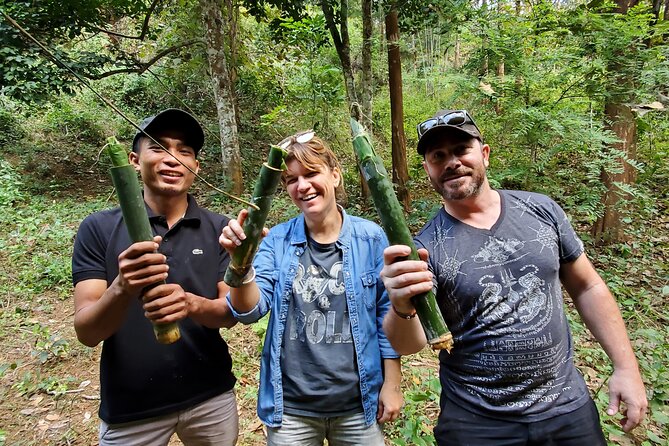
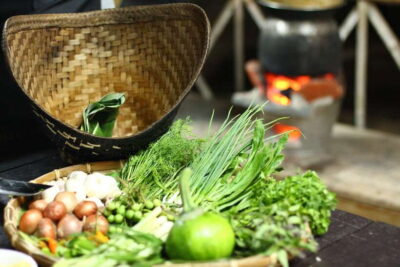
The food lesson begins before the fire is lit. Your guide helps you find plants and other ingredients used in Lao cooking. The supplied details do not list the exact dishes or plants, so you should not expect a fixed menu in the style of a formal cooking school.
That flexibility is part of the appeal. You learn to look at what grows locally and understand how a meal can be built from what is available. The Khmu guide is central here. Guides named Peng and Pheng have led sessions, and their farming and village experience adds practical context to the ingredients.
You may collect herbs, leaves, or other edible plants, depending on the season and location. The activity also includes snacks, bottled water, and lunch, so the food gathering is an educational part of the day rather than a test of survival. You are not expected to find everything needed to eat.
I like this approach because it connects cooking with place. In a typical city class, the ingredients are already washed and arranged. Here, you get a better sense of how food is found, selected, prepared, and shared. The tradeoff is that the experience may feel less predictable. If you want exact recipes and a polished kitchen, this is not the right choice.
Bamboo, stone, fire, and simple tools
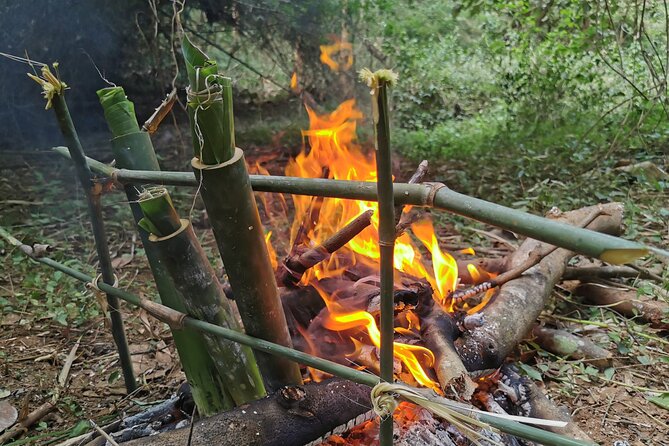
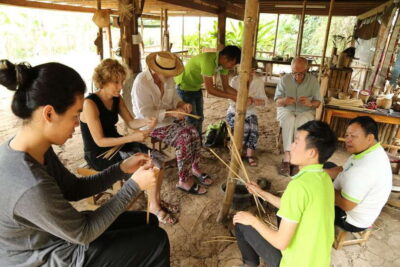
Bamboo is described as a basic material in Lao cooking, and it becomes one of the main subjects of the class. You learn to use it for cooking and to make personal utensils. The tools and equipment needed for the lesson are provided, including the materials for cutting and preparing bamboo.
Making your own chopsticks and drinking cup is one of the most memorable parts of the activity. You can take them home, giving you a useful reminder of the day rather than a shop-bought souvenir. The work also shows how one local material can serve several purposes.
You may also make or use a bamboo cooking tool, depending on the day’s lesson. Accounts describe making cooking, eating, and drinking utensils, along with a simple trap using materials from the area. The trap is not listed as a formal inclusion, so treat it as a possible extra rather than a promised part of every outing.
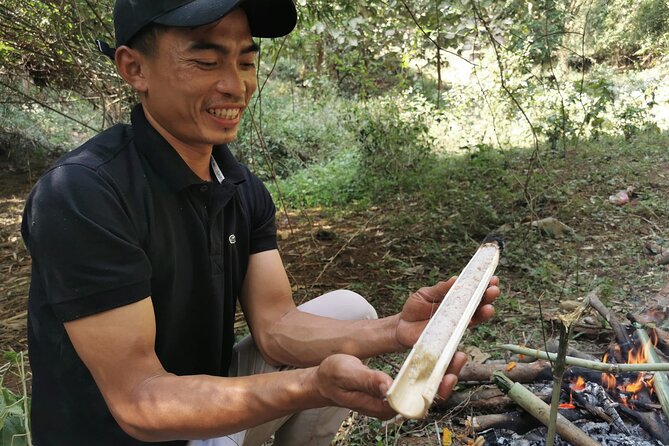
The cooking methods are deliberately simple. The description refers to bamboo, stone, and other forest products. One account also describes starting fires from scratch and cooking with fresh banana leaves. These details point to a class about technique and resourcefulness, not just recipes.
Safety deserves some thought. Machetes are used in the bamboo work, so you should listen closely to the guide and avoid rushing. The information provided does not set out age limits or special safety rules, so ask the operator if anyone in your group has limited mobility or is uncomfortable using cutting tools.
A few more trips around Luang Prabang worth a look
- Luang Prabang: Cruise to Pak Ou Caves & Kuang Si Waterfalls
★ 5.0 · 1,769 reviews - Luang Prabang: Cruise to Pak Ou Caves & Kuang Si Waterfalls
★ 4.8 · 1,360 reviews - Half Day Mekong Cruise to Pak Ou Caves (Morning / Afternoon)
★ 4.6 · 290 reviews - Luang Prabang: UNESCO World Heritage City Highlights Tour
★ 4.6 · 201 reviews
Preparing and sharing the Lao meal
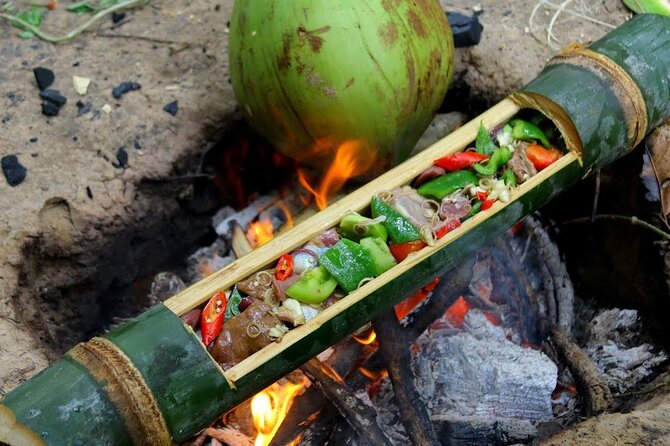
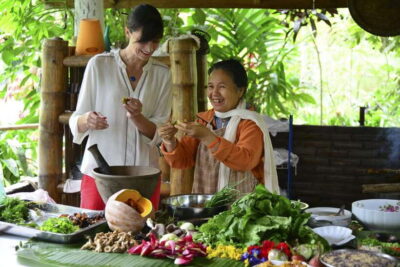
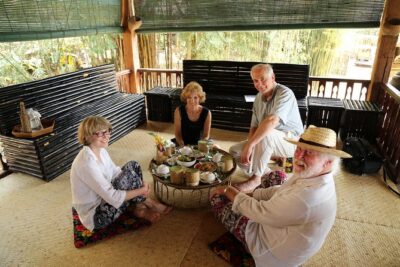
After gathering ingredients and shaping utensils, you prepare a traditional Lao meal at the outdoor cooking area. Lunch is included, and the meal is the payoff for the work you have done together.
The exact dishes are not specified. That means you should book for the method and setting rather than for one particular recipe. You will learn how local ingredients are handled and cooked, but you should not arrive expecting a printed menu or a guaranteed dish from a restaurant.
Banana leaves, bamboo, fire, and fresh ingredients give the meal a strong sense of place. You are eating food prepared with materials you have helped collect and shape. For many people, this is more meaningful than making a familiar dish in a modern kitchen.
The setting can also be demanding. Outdoor cooking means smoke, heat, rain, insects, and uneven ground are possible. One guide jokingly referred to spiders in a response to a participant, so do not choose this activity if you want a completely controlled indoor environment.
What the guide adds to the day
The guide is not simply there to demonstrate a recipe. You rely on this person to identify plants, explain local food practices, handle the outdoor cooking setup, and show you how to use bamboo tools.
Peng is described as a farmer with strong knowledge of farms and villages. Pheng is also praised for explaining where the food came from and for helping with harvesting, fire making, and cooking. Names and guides may change, but the important point is that the quality of the experience depends heavily on the local facilitator.
This is one reason the private format has value. A one-on-one or small-group lesson gives you more time to ask what a plant is used for, why bamboo is chosen, or how the cooking method changes with available materials.
The activity also supports a more direct connection with village life. You may pass through or spend time near a village, and the setting can feel like a visit to a working community rather than a staged cultural show. You should remain respectful, follow the guide’s lead, and remember that the village is a lived-in place, not a backdrop.
Is $78.08 a fair price?
At $78.08 per person, this is not the cheapest food activity in Luang Prabang. The value comes from what is bundled into the five-hour program: private transportation, a local guide, bottled water, snacks, lunch, cooking equipment, bamboo materials, and a private group arrangement.
I think the price is reasonable if you want a full half-day outing rather than a short recipe lesson. Transport alone saves planning time, while the private format gives the guide room to tailor the pace. The bamboo utensils and outdoor meal also add something that a standard class may not include.
The value is less clear if your main goal is to learn several Lao recipes for cooking at home. Since the dishes are not specified and the focus is broader than recipe instruction, a city cooking school may suit you better.
Solo visitors should check the booking conditions carefully. One person had to pay for two participants because there was no solo booking option. Since this is a private experience, the minimum charge may make it expensive for one person traveling alone.
The tour is booked on average about 23 days ahead, so it is sensible to reserve early if your Luang Prabang dates are fixed. Confirmation is normally sent at booking, but reservations made within one day of departure are subject to availability and may be confirmed later.
Who should book this experience?
I would choose this for someone who wants an active cultural outing and enjoys learning through work. It suits you if you like farms, village settings, simple tools, local food, and outdoor meals more than polished facilities.
It is also a good match for people who want more than a cooking demonstration. You collect ingredients, shape bamboo, help prepare the fire and meal, and take home utensils you made yourself.
Families may enjoy the variety, but parents should decide if their children are comfortable with a forest or farm walk, outdoor cooking, and machete work under supervision. The operator should be asked about suitability for younger children because no age guidance is provided.
I would be more cautious if you have limited mobility, dislike insects, need a precise menu, or want guaranteed forest conditions. The short walk may be manageable for many people, but the full activity takes place outdoors and the setting can change.
Free cancellation is available up to 24 hours before the start time. Canceling within 24 hours is not refundable, and changes during that period are not accepted. The experience also requires a minimum number of participants, so an operator cancellation may result in another date, another activity, or a full refund.
My take: book it for the method, not a fixed menu
This is a strong choice if you want to understand Lao food through the materials and people behind it. The best parts are the Khmu-led instruction, the bamboo work, the fresh ingredients, and the shared meal cooked outside.
Book it with realistic expectations. You may cook on a farm rather than in primary forest, and the menu is not fixed in the information provided. If that sounds like a welcome part of the adventure, the five-hour private format offers good value and a memorable way to spend time beyond central Luang Prabang.
FAQ
Where does the activity start and end?
It starts and ends at Naga Lodge Eco Resort in Ban Xieng Mouark, Luang Prabang. Pickup is offered, and the activity returns to the meeting point.
How long does the cooking experience last?
The activity lasts approximately five hours.
Is transportation included?
Yes. Private transportation is included, and pickup is offered.
Is this a private tour?
Yes. Only your group participates in the activity.
What food is included?
Lunch, snacks, and bottled water are included. The specific dishes are not listed.
Will I gather ingredients?
The activity includes learning about and picking plants or collecting ingredients used in the meal. The exact ingredients may depend on the setting and day.
Will the cooking take place in the forest?
The activity is described as taking place in the forest, with a walk of about 10 minutes to a cooking shelter. At least one account describes a farm-based setting instead, so the location may vary.
What will I make from bamboo?
You will make your own eating chopsticks and a drinking cup from bamboo. These can be taken home as souvenirs.
Are cooking tools provided?
Yes. The tools and utensils needed for the cooking class are included.
Can I cancel for a full refund?
You can cancel for a full refund at least 24 hours before the experience starts. Cancellations or changes made within 24 hours are not refunded or accepted.
Just added in Luang Prabang
- Luang Prabang: Pottery Workshop & Wat Chomphet cycling Tour★ 4.6 · 5 reviews
- 3 Days The Plain of Jars and Xieng Khouan (Depart from Luang Prabang)★ 5.0 · 3 reviews
- Luang Prabang Local Market and Morning Food Tour with Drinks★ 5.0 · 6 reviews
- Luang Prabang Early Morning Alms Giving and Wet Market★ 4.5 · 5 reviews
- Luang Prabang: Countryside Mountain Bike Tour with Lunch★ 3.6 · 7 reviews
- Luang Prabang: Weaving Workshop Half-Day Experience★ 5.0 · 9 reviews
- Laos Railway: Train Tickets Easily – Skip the Lines – No worries★ 5.0 · 9 reviews
- The Namkhan – Cooking Class★ 5.0 · 8 reviews
Lao Cooking Classes, compared.
Day-time Bamboo weaving & Cooking Classes join-in
Read our review →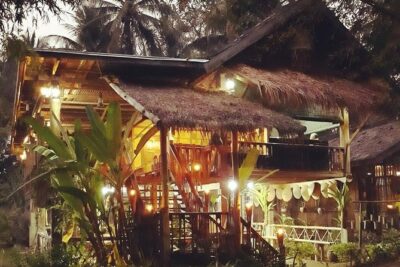
Evening Bamboo weaving & Cooking classes join-in
Read our review →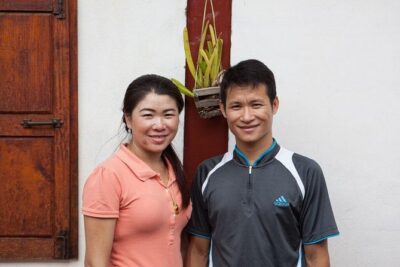
Traditional Market Tour and Private Laotian Cooking Class with a Local
Read our review →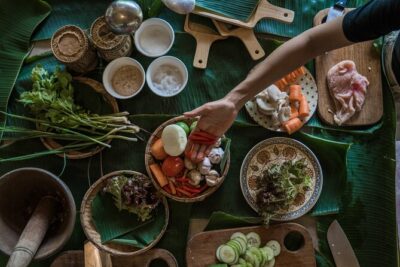
Browse the lists this tour appears in