
Reviewed · LUANG PRABANG TOURS
Living Land Rice Farming Experience
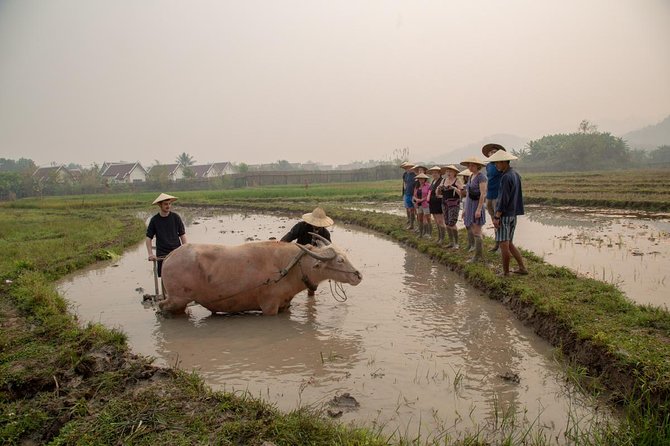
Rice farming looks simple until you try the many steps yourself. At Living Land Farm, you work through traditional rice production, from preparing the muddy field and planting seedlings to harvesting, processing, cooking, and eating the finished grain. A water buffalo may help with the field work, giving the lesson a very real feel.
I like two things here: the hands-on approach, which teaches more than a quick visit to a village, and the chance to support local education. Farm proceeds help more than 60 students with their studies and fund free English classes for the village. The main caution is practical: you will get muddy, and the booking price may be higher than arranging the experience directly with the farm.
Key points to know
- Fourteen stages of rice production: Learn how rice moves from seed and field to the cooking pot.
- A working community farm: The setting includes rice fields, mountains, family farmland, and traditional workshops.
- Mud is part of the lesson: You may work barefoot or knee-deep in a rice paddy, so wear clothes that can get dirty.
- Lunch needs checking: A farm lunch of Luang Prabang dishes and fruit is included only with the option that lists lunch.
- A useful local purpose: Proceeds support student education and free English classes in the village.
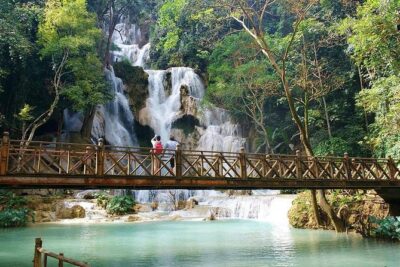
- Extra stops can change the day: Waterfalls and caves may be added, but transport arrangements need careful checking.
Why rice farming makes a better cultural lesson
Luang Prabang is easy to enjoy from its temples, cafés, and riverside streets. But rice is the food at the center of daily life in Laos, and this half-day experience explains the work behind every bowl.
You do not simply look at a field from a roadside. You take part in the process. Depending on the farm’s growing cycle, you may prepare a trench, guide a water buffalo through the soil, plant rice, transplant seedlings, harvest mature stalks, and work through the steps that prepare rice for the table.
The farm grows rice throughout the year, so the exact field activity can vary. That is useful to understand before booking. You should expect a practical lesson rather than a staged performance with every part happening at full scale on the same day.
The setting is a strong part of the experience. Living Land Farm sits just outside Luang Prabang, with rice fields and mountains around it. It is close enough for a half-day visit, yet far enough from the center to show you a quieter side of the area.
A few more trips around Luang Prabang worth a look
- Luang Prabang: Farm Tour and Buffalo Buffet Adventure
★ 4.7 · 11 reviews
From the 8 a.m. start to the farm
The stated start time is 8 a.m., while the farm’s half-day program begins around 8:30. Pickup is offered, but the exact pickup plan should be confirmed when you book.
The main farm program lasts about three hours and 20 minutes. The full experience is listed at about five hours, which allows time for transport and the meal if you select the lunch option.
The maximum group size is 20 people. That is not a private tour, but it is small enough for a guide to explain the tools and let people take turns. If everyone wants to handle the buffalo, plant seedlings, or try the traditional equipment, a larger group could mean some waiting.
The farm team has used several guides, including Johnny, Kham, Sai, and Geo. The experience depends partly on who leads your session, but the strongest descriptions point to guides who explain the work through family stories and practical instruction. Johnny, in particular, has been praised for explaining the long process of planting, harvesting, and cooking rice. Kham has also led sessions that included detailed teaching in the fields.
Getting your feet into the rice field
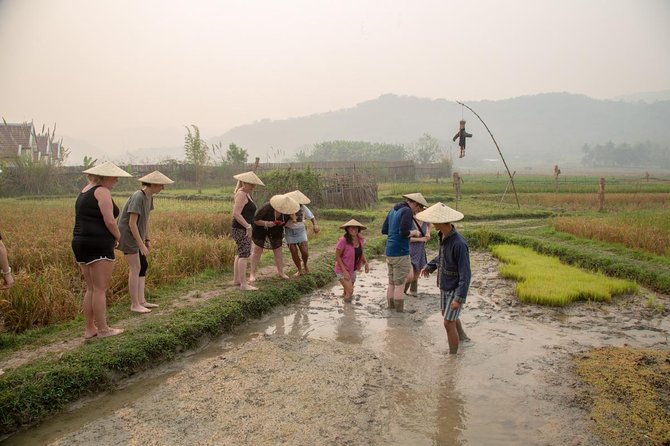
The field work is the heart of the morning. Prepare to remove your shoes and work with wet soil. One account describes going knee-deep in mud, and another specifically advises wearing shorts because you are entering a real rice field.
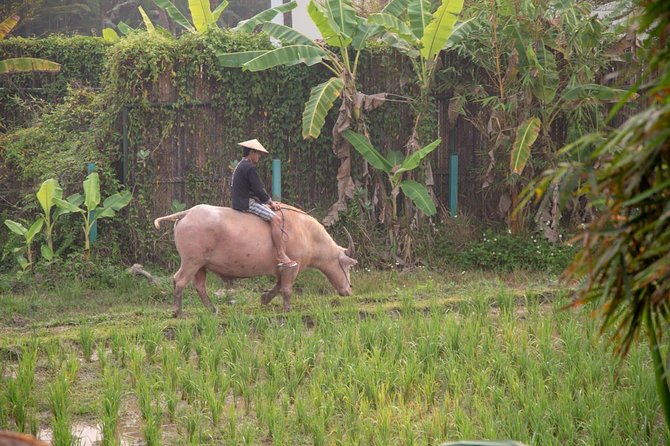
You may start with the soil and water buffalo. The buffalo helps till or prepare the area, showing how traditional farming works without modern machinery. The animal is described as gentle, and names such as Suzanne and Bentley appear in the farm experience, though the animal available on your visit may differ.
From there, the lesson can move through planting and transplanting. This is where the effort becomes clear. A rice plant does not simply appear in a flooded field. Seeds must be started, young plants moved, and rows maintained through the growing cycle.
You may also handle harvesting and the work that follows. The point is not to make you a farmer in a morning. It is to give you enough physical contact with the process that rice no longer seems like a simple crop picked from a field.
Bring a willingness to work, not just a camera. The activity is most rewarding when you accept dirty feet, wet clothing, and a slower pace. If you want a clean, dry sightseeing stop, this is the wrong tour.
The fourteen steps from seed to supper
The farm presents rice growing as a chain of connected jobs. The exact order may change with the season and the day’s conditions, but the experience can include:
- Preparing a rice field
- Using a water buffalo in the soil
- Planting rice seeds
- Transplanting young plants
- Harvesting mature rice
- Processing the harvested grain
- Preparing rice for cooking
- Cooking and tasting rice
The complete demonstration is often described as covering 14 stages. That matters because the lesson goes beyond planting. You see how much labor is needed before rice can be sold or served.
I especially like this part for families and curious adults who want a clear connection between food and work. It also gives you a better understanding of rural life around Luang Prabang without turning the visit into a lecture.
The physical work is real, but participation appears to be flexible. Most people can take part, and you can join at your own level. Still, the available information does not promise a fully accessible route or specific support for mobility needs, so ask before booking if that is important for you.
Same town, a slower sort of day:
- Luang Prabang: Cruise to Pak Ou Caves & Kuang Si Waterfalls
★ 5.0 · 1,769 reviews - Luang Prabang: Cruise to Pak Ou Caves & Kuang Si Waterfalls
★ 4.8 · 1,360 reviews - Half Day Mekong Cruise to Pak Ou Caves (Morning / Afternoon)
★ 4.6 · 290 reviews - Luang Prabang: UNESCO World Heritage City Highlights Tour
★ 4.6 · 201 reviews
Bamboo, sugar cane, and the village workshop
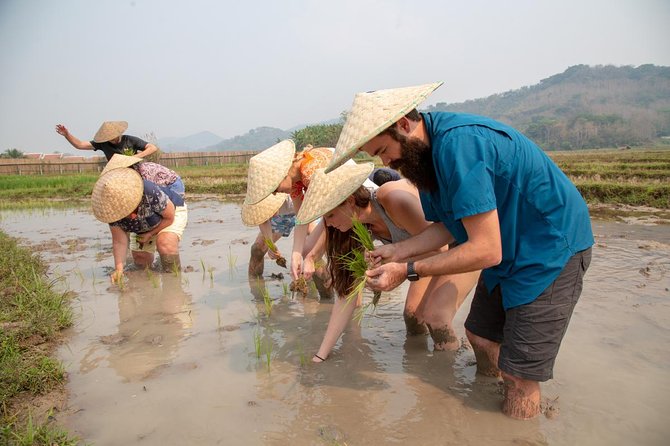
Rice is the main subject, but the farm includes other demonstrations that help round out the visit.
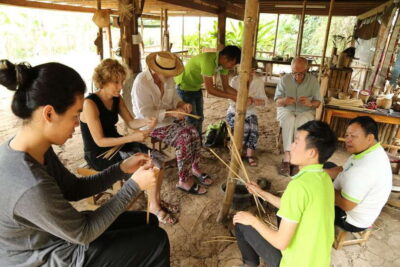
Bamboo weaving shows how a common local material becomes a useful household object. You may handle the bamboo and try the basic technique, though the exact project can depend on the day.
Sugar cane pressing is another simple but memorable activity. The work gives you a direct look at how a crop can be processed into something ready to taste. Blacksmithing adds a different view of village skills, with heat, metal, and hand tools replacing the soft mud of the paddy.
These activities help prevent the morning from feeling repetitive. They also show that traditional farming life involves many linked crafts, not only rice production.
One activity involving an animal named Bentley did not appeal to every participant and was described as unnecessary. That is a useful reminder that the farm includes more than the core rice lesson. If one extra activity does not interest you, the main value remains the rice work and the chance to speak with the local team.
Lunch at the farm, if you choose it
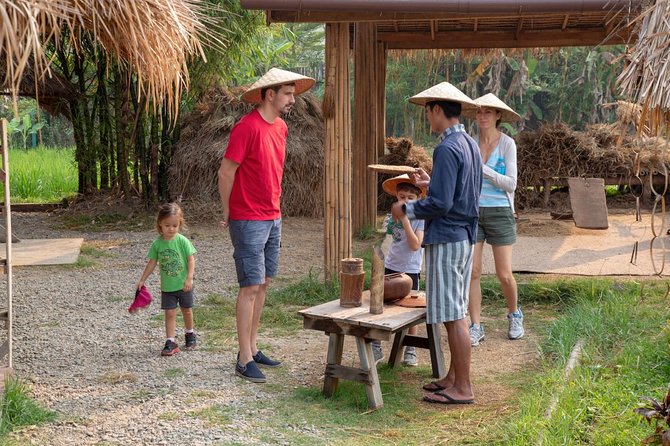
A meal can be one of the best parts of the visit, but pay close attention to the booking option. Lunch is not included in every version of the experience.
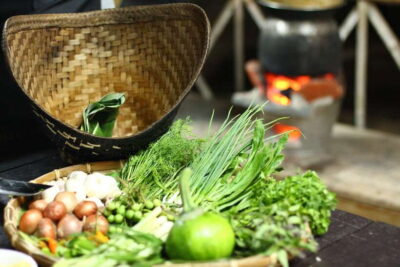
The farm lunch consists of typical Luang Prabang dishes and fruit. The meal gives you a chance to sit down after the field work and understand the connection between the morning’s labor and the food on the table.
The lunch has received especially strong praise, and it is worth considering if your schedule allows. One person who skipped lunch still enjoyed the provided rice-based snacks, but the full meal offers more time at the farm and a clearer finish to the experience.
The program ends with a tasting of rice-based snacks. This is a small detail, but it gives the morning a pleasant close. You have just seen rice planted, harvested, and prepared, then get to taste foods made from it.
What your payment supports
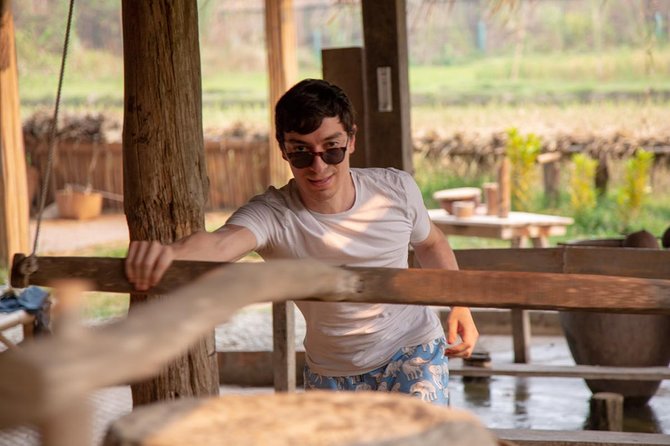
Living Land Farm is not presented only as a commercial activity. Proceeds from the rice experience support more than 60 students with their studies, and the farm provides free English classes for the whole village.
That local purpose adds value to the $64.17 price, especially if you want your spending to connect with the community you are visiting. You are paying for instruction, activities, farm access, and possibly lunch, while also contributing to education.
Still, compare prices carefully. One serious complaint says the booking platform charged a family of four more than $100 above the direct farm price. That does not prove every booking carries the same difference, but it is enough reason to check the direct rate before paying.
Group discounts are available, which can make the per-person cost more attractive for families or friends. Ask for the exact discount and compare it with the direct booking price, particularly if you are booking several places.
The difference between a farm day and an add-on day
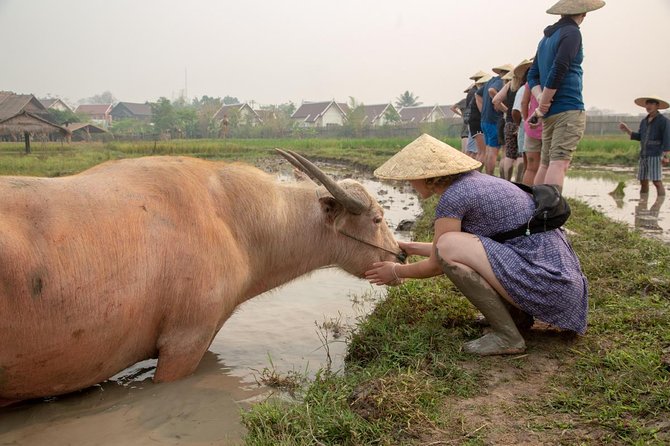
The core program is a half-day farm visit. Waterfalls, caves, and other excursions can be added, but they are not part of the basic farm activity.
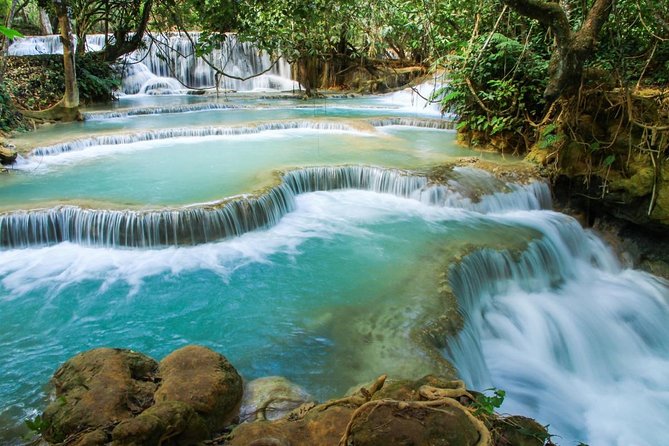
This is where planning matters. At least one combined day involved confusion over transport, including an unnecessary return to the hotel before continuing to a waterfall. Another account advises telling the driver to go directly from the farm to the falls if that is your plan.
If you add an excursion, confirm these points in advance:
- Which stops are included
- Where you go after lunch
- Whether you return to your hotel between activities
- How long you have at each stop
- Whether the same guide stays with you
- When you return to Luang Prabang
The farm itself can be worthwhile even if you skip the add-ons. I would treat the waterfall or cave as a separate planning decision rather than assuming the combined itinerary will run as neatly as the farm program.
Who will get the most from this experience
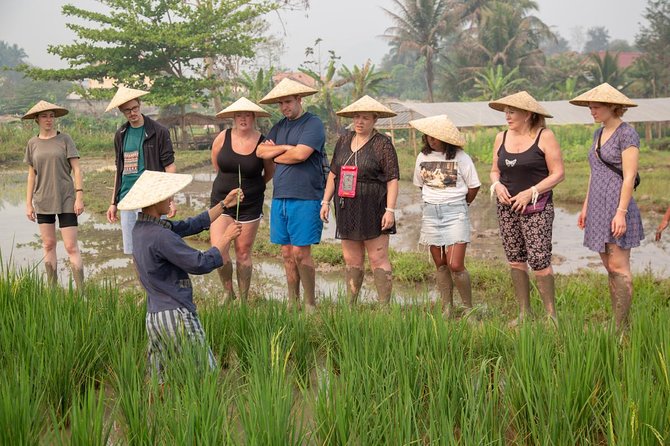
This suits you if you want active cultural learning, enjoy meeting local people, and do not mind getting dirty. Families, couples, and small groups can all find something to do, and the group limit of 20 keeps the activity from becoming a huge outing.
It is also a good choice if you have already seen Luang Prabang’s main temples and want a different view of local life. The farm explains ordinary work rather than presenting only historic or religious sights.
You may want to skip it if you dislike mud, barefoot activities, outdoor heat, or hands-on work. It is not a polished cooking demonstration or a passive countryside drive.
The experience can also suit people who care about community benefit. The student support and English classes give the visit a clear local purpose, though you should still compare prices before booking.
Timing, clothing, and booking advice
Plan for a morning start around 8 a.m. The farm program begins at about 8:30 and lasts roughly three hours and 20 minutes, while the total outing is about five hours.
Wear shorts or other clothes that can get muddy. Bring a change of clothes if you have room, and expect to remove your shoes in the field. The most important item is not fancy equipment. It is a willingness to work in wet soil.
The experience accepts mobile tickets, offers pickup, and may provide group discounts. Confirmation is sent within 48 hours, subject to availability. The maximum is 20 people, and most people can participate.
The cancellation terms are strict. The experience is non-refundable and cannot be changed after booking. If bad weather cancels the activity, you can receive another date or a full refund. The same applies if the minimum number of participants is not reached. Since weather matters for field work, avoid booking this as your only fixed plan on a very short visit.
Should you book the Living Land Rice Farming Experience?
Yes, if you want to understand rural Laos through work rather than observation. The strongest reasons are the full rice-production lesson, the mountain and field setting, the warm teaching style associated with guides such as Johnny and Kham, and the support for local education.
Choose the lunch option if you want the complete farm visit. Wear clothes for mud, confirm pickup, and check the price against direct booking before you commit.
I would be more cautious about adding waterfalls or caves unless the transport plan is written out clearly. The farm activity itself is the reliable centerpiece. Book it for an honest, active look at how rice reaches the table, not for a tidy sightseeing morning.
FAQ
Where is the Living Land Rice Farming Experience?
It takes place at Living Land Farm just outside Luang Prabang, overlooking rice fields and mountains.
How long does the experience last?
The full outing lasts about five hours. The farm program itself lasts about three hours and 20 minutes.
What time does the tour start?
The listed start time is 8 a.m. The farm’s half-day program begins around 8:30 a.m.
Is lunch included?
Lunch is included only when you select the option that includes lunch. The meal consists of typical Luang Prabang dishes and fruit, and rice-based snacks are served as part of the farm program.
Will I get muddy?
Yes. The experience includes working in a rice field, and you may go barefoot or knee-deep in mud. Wear shorts or clothing that can get dirty.
How many people can join the experience?
The maximum group size is 20 people. Group discounts may be available.
Can I cancel or change my booking?
The experience is non-refundable and cannot be changed for any reason. If poor weather or an insufficient number of participants causes the operator to cancel, you are offered a different date or a full refund.
Just added in Luang Prabang
- Luang Prabang: Pottery Workshop & Wat Chomphet cycling Tour★ 4.6 · 5 reviews
- Luang Prabang Local Market and Morning Food Tour with Drinks★ 5.0 · 6 reviews
- Luang Prabang Early Morning Alms Giving and Wet Market★ 4.5 · 5 reviews
- Luang Prabang: Countryside Mountain Bike Tour with Lunch★ 3.6 · 7 reviews
- 3 Days The Plain of Jars and Xieng Khouan (Depart from Luang Prabang)★ 5.0 · 3 reviews
- The Namkhan – Cooking Class★ 5.0 · 8 reviews
- Luang Praban Buddha’s Light Stage Show Ticket★ 4.5 · 9 reviews
- Luang Prabang Mekong Sunset Cruise and Hot Pot Dinner★ 5.0 · 9 reviews
Luang Prabang Tours, compared.
Half Day Mekong Cruise to Pak Ou Caves (Morning / Afternoon)
Read our review →
Browse the lists this tour appears in