
Reviewed · LAO FOOD TOURS
Luang Prabang Local Market and Morning Food Tour with Drinks
Luang Prabang’s best breakfast may not be waiting at your hotel. This two-hour morning outing takes you to local food stops and Phosi Market, where dishes such as Khao Poun rice noodles and steamed sticky-rice dessert reveal how Lao people eat at the start of the day. Your guide also explains the stories behind each dish, not just its ingredients.
I like the early 7:00 am start, since the market is at work and you see food being sold as part of daily life. I also like the small maximum of 10 people and the local tuk tuk pickup, which keeps the outing personal and practical. The main drawback is timing: you get a focused taste of Luang Prabang rather than a long food crawl, and some dishes may be spicy.
Key points at a glance
- Four distinct Lao breakfast tastes: Try Naem Khao, Khao Poun, Pun Mang, and Kao Sung Ka Ya.
- Phosi Market after breakfast: Walk through Luang Prabang’s largest market, with cooked food, fresh produce, clothing, cookware, and household goods.
- Food with cultural context: Guides such as Anou and Khamla explain the history of the dishes and their place in Lao cuisine.
- Small-group format: The tour accepts a maximum of 10 people, making questions and conversation easier.
- Tuk tuk transportation: Pickup is provided, with the outing finishing on foot at the market.
- Good value for food-focused visitors: At $39 per person, the price covers transport, guiding, tastings, and a compact introduction to local food.
Why a 7:00 am breakfast tells you more about Laos
I like food tours that begin before the sightseeing day gets going. Breakfast is often the clearest window into ordinary life, and this one puts you at the table while Luang Prabang is starting its day. You are not simply looking for a famous dish. You are learning why certain foods are eaten in the morning and how Lao cooking brings together rice, herbs, meat, vegetables, coconut, peanuts, and sour sauces.
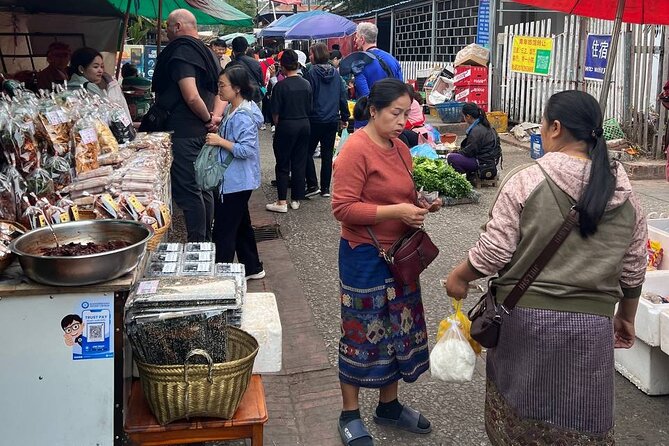
The timing also gives the tour a useful sense of place. Phosi Market is not presented as a decorative stop built for visitors. It supplies the town with daily necessities, from cooked meals and vegetables to clothing, furniture, cookware, bedding, and live animals. That range matters. You see food within the wider market system that supports local households.
Your guide is an important part of the experience. Anou is praised for explaining Lao culture and history alongside the food, while Khamla is noted for making the market walk friendly and engaging. The guide does more than point at dishes. You can ask how food is prepared, what flavors to expect, and how a meal connects with the wider story of Laos and Southeast Asia.
More food walks in Luang Prabang
- Luang Prabang Evening Food Tour by Tuk-Tuk
★ 4.5 · 68 reviews - Luang Prabang: Foodie Walking Tour & Monk Blessing
★ 4.7 · 66 reviews - Luang Prabang: Mekong Meals Food Tour with 15+ Tastings
★ 4.9 · 58 reviews
Starting in historic Luang Prabang
The first hour is set in Luang Prabang, the former royal capital of Laos. The town lies where the Nam Khan and Mekong rivers meet, and it has been inhabited for thousands of years. You may already know it for its Buddhist temples, including Wat Xieng Thong and Wat Mai, but this experience approaches the town through food rather than a formal temple visit.
That distinction is useful. A temple tour can show you architecture and religion. A breakfast tour shows you what people eat, share, sell, and carry into the morning. The guide’s explanations of dish history add a layer that you would probably miss if you simply chose a noodle bowl from a food stall on your own.
This part is not a long historical sightseeing program. The stated schedule gives about one hour to Luang Prabang, followed by about one hour at Phosi Market. You should think of the town portion as a food-focused introduction to place, not a substitute for visiting Wat Xieng Thong, Wat Mai, or other major sights.
The city setting also helps explain the range of influences in Lao cuisine. Luang Prabang sits in northern Laos, yet the food connects to wider Southeast Asian cooking traditions. Your guide can make those links clear while you taste, which is one of the strongest reasons to take the tour early in your stay.
Four dishes that make up the morning meal
The food is the heart of the outing. Four dishes are highlighted, and they offer noticeably different textures and flavors.
Naem Khao
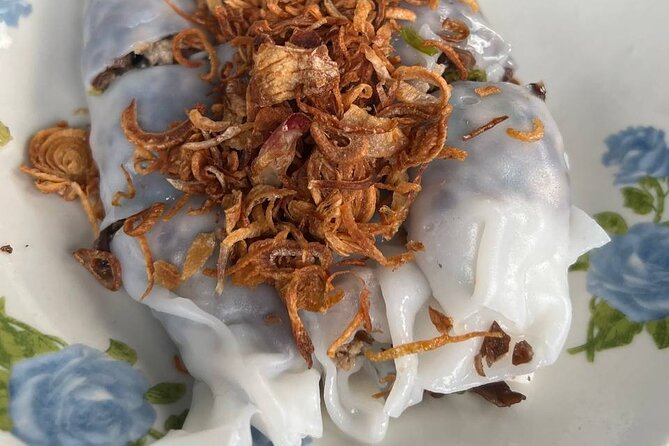
Naem Khao is described as a steamed rice cake with egg, served with a sour and sweet sauce. It gives you a gentle introduction to the way Lao food balances contrasting tastes. The rice and egg provide a soft, filling base, while the sauce brings sharper notes.
If you are cautious with spice, ask your guide what to expect before taking a full bite. The overall cuisine can be spicy, but the dishes are not all presented as hot. A guide can help you pace the tasting and explain which sauce adds heat, sourness, or sweetness.
A few more trips around Luang Prabang worth a look
- Mekong Meals Food Tour with 15+ Tastings
★ 5.0 · 37 reviews - Luang Prabang: Mekong Sunset Cruise & Lao Tasting Dinner
★ 4.3 · 27 reviews - Luang Prabang Plates Food Tour with 15+ Tastings
★ 5.0 · 21 reviews - Prabang Plates Food Tour with 15+ Tastings
★ 5.0 · 15 reviews
Khao Poun
Khao Poun is an authentic rice noodle dish with pork and fresh herbs. This is likely to feel like the most recognizable breakfast bowl of the four, but the herbs give it a distinctly fresh character. You get a useful contrast between the warm noodles and pork and the bright flavor of the herbs.
The dish also shows why a guided tasting is more useful than a list of restaurant names. You learn how the ingredients work together and why this kind of noodle meal suits the morning. The guide can explain the dish’s place in local eating habits while you are tasting it.
Pun Mang
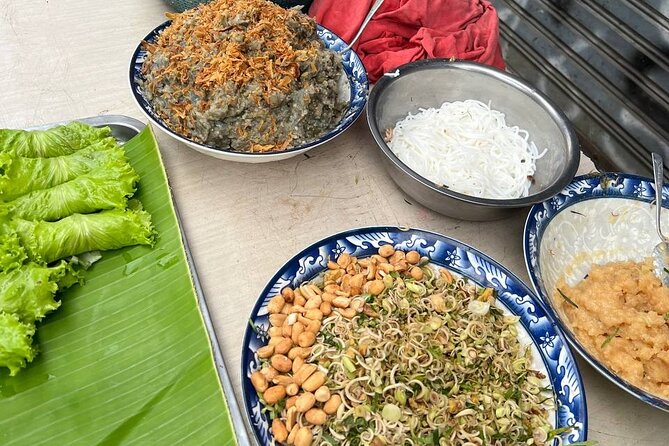
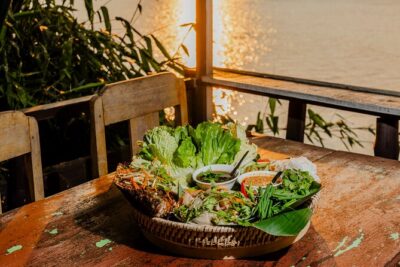
Pun Mang combines pork, lemongrass, peanuts, and eggplant, rolled in fresh lettuce. This is a more assembled bite, with several textures in one mouthful. Lemongrass brings a clean, citrus-like note, peanuts add crunch, and lettuce keeps the package fresh.
I would pay close attention to this dish if you want to understand the balance in Lao food. It is not simply meat with a side vegetable. The ingredients are built into one bite, and the guide’s explanation can help you notice how herbs, vegetables, and seasoning shape the dish.
Kao Sung Ka Ya
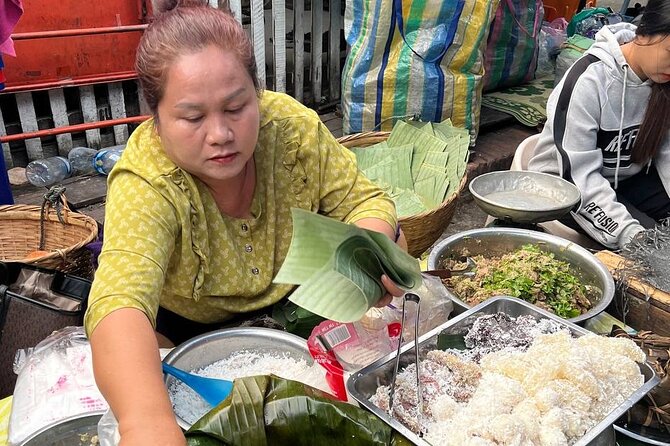
Kao Sung Ka Ya is a steamed sticky-rice dessert with shaved coconut. It closes the tasting on a sweeter note and gives you a different use of sticky rice. After the savory noodles and pork dishes, the coconut and rice should feel like a clear change of direction.
Dessert is an important part of the experience because it keeps the tour from becoming a series of savory samples. You get to see how sticky rice works in a sweet preparation, not just as an accompaniment to a main meal.
Reading the market at Phosi
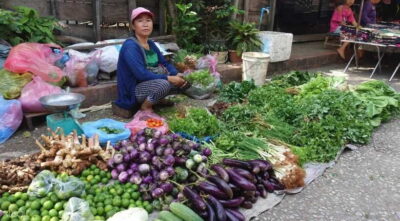
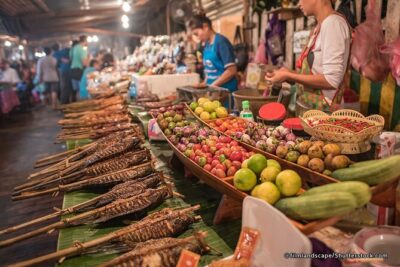
Phosi Market is Luang Prabang’s largest market and supplies the whole town. Its indoor and outdoor areas carry much more than breakfast. You can expect to see cooked meals, clothing, furniture, cookware, bedding, vegetables, and live animals among the goods on sale.
That variety makes the final walking section worthwhile. You are not moving from one food stall to another in isolation. You are seeing food alongside the objects and ingredients people use in everyday life. The guide introduces you to market traders, and you have the chance to take photographs of the colorful food displays.
Be respectful with your camera. The tour makes photography possible, but a market is also a workplace. It is sensible to ask before photographing individual sellers or live animals. Your guide can help you handle those moments politely.
The market visit also gives you a chance to select sweets and desserts. Since the tour finishes with a walk through the market, you should save a little appetite rather than treating the tasting as a heavy breakfast. The four featured foods may be enough for some people, but you may also want to look at what else is available.
One limitation is that market conditions change. A local market is not a fixed museum display, so the exact stalls, goods, or food presentations may vary. That is part of the point, but it means you should expect a real market rather than a perfectly staged food set.
What the tuk tuk and small group add
Pickup is offered by local tuk tuk, and the outing begins at 7:00 am. This matters because early transport can be inconvenient when you are still finding your way around Luang Prabang. You do not need to arrange every movement yourself, and the tuk tuk adds a distinctly local touch to the short transfer.
The tour lasts about two hours. That is long enough for several tastings, explanations, and a market walk, but short enough to fit before a full day of sightseeing. I would schedule it near the beginning of your stay, when you can use the guide’s food advice for later meals.
The maximum group size is 10 people. That is not a private tour, but it is small enough for the guide to keep the group together and answer questions. It also makes introductions to market traders more manageable than they would be with a large crowd.
A mobile ticket is provided, and confirmation arrives at booking. You can cancel for a full refund up to 24 hours before the start time. Changes or cancellations within 24 hours are not refunded, so pay attention to the local cutoff if your plans are uncertain.
Is $39 a fair price?
At $39 per person, this is not the cheapest way to buy breakfast in Luang Prabang. You could certainly spend less by choosing a local dish on your own. The value comes from what surrounds the food: tuk tuk pickup, a guide, explanations of the dish history, introductions to market traders, and a planned route through Phosi Market.
I think the price is reasonable if you care about context. Without a guide, you might recognize rice noodles or sticky rice but miss the distinctions between Naem Khao, Khao Poun, Pun Mang, and Kao Sung Ka Ya. You might also pass through Phosi Market without understanding how large its role is in the town’s daily supply.
The value is less clear if you only want a large breakfast or a long list of tastings. Two hours goes quickly, and the format is focused. You are paying for a compact introduction to Lao food and market life, not an all-day eating tour.
The price also works better for first-time visitors than for someone who already knows Luang Prabang’s food scene well. If you have eaten widely across Laos and are comfortable navigating markets, you may prefer to explore independently. If you are unsure what to order, the guide’s help can save time and make the $39 feel worthwhile.
Spice, comfort, and who should book
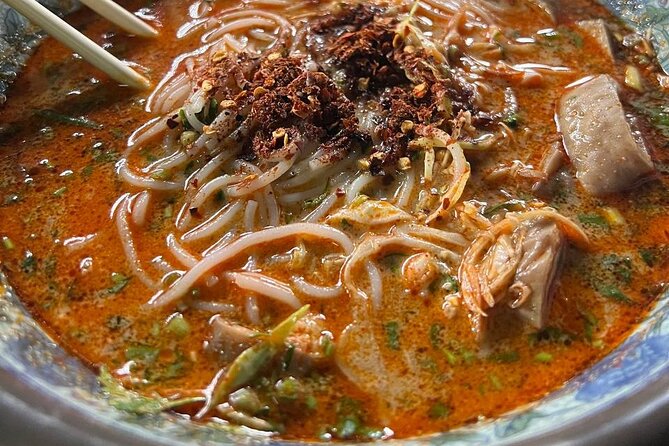
Lao food can be spicy, and that is the clearest comfort note to keep in mind. One person specifically described the cuisine as spicy but manageable for someone who enjoys heat. If you do not, tell your guide at the start and ask about sauces and seasoning before tasting.
This tour suits curious eaters who want local dishes explained in plain terms. It is also a good fit for anyone who normally defaults to hotel breakfast and wants a more direct connection with Luang Prabang’s daily food culture.
I would recommend it for:
- First-time visitors to Luang Prabang
- People who enjoy trying unfamiliar foods
- Travelers who want a short morning activity
- Visitors interested in food history and local markets
- Small groups that prefer a guide over self-guided tasting
I would be more cautious if you need a long, slow breakfast, dislike spicy food, or want a full historical tour of Luang Prabang’s temples. The outing includes historical context, but its main focus is eating and the market.
A practical way to fit it into your morning
Start with a light meal or skip the hotel breakfast. The purpose of the tour is to taste several morning dishes, so arriving full would reduce the value. Bring a phone or camera for the food displays, while keeping in mind that sellers should be treated with courtesy.
Wear something comfortable for the market walk. The tour uses a tuk tuk for pickup and finishes with walking, so you should be ready for a change from riding to exploring on foot. The total duration is about two hours, leaving the rest of the day open for temples, river views, or independent meals.
I would also keep lunch plans flexible. The tasting may be enough for you, or it may leave you curious to try more market food. The guide’s comments can help you decide what to seek out later.
Should you book this breakfast tour?
Book it if you want local food with an explanation, not just a quick meal. The combination of four Lao dishes, a guide such as Anou or Khamla, local tuk tuk pickup, and Phosi Market gives you a useful first look at how Luang Prabang eats.
Skip it if you prefer to choose your own breakfast, need complete control over ingredients, or already know Lao cuisine well. For most first-time visitors, though, $39 is a fair price for a short, well-focused introduction, especially when you take it early in your stay and use the guide’s advice for the rest of your visit.
FAQ
What time does the tour start?
The tour starts at 7:00 am.
How long does the experience last?
It lasts approximately two hours.
Is pickup available?
Yes. Pickup is offered, and transport is provided by local tuk tuk.
What foods are included?
The featured foods are Naem Khao, Khao Poun, Pun Mang, and Kao Sung Ka Ya.
Where does the market portion take place?
The market portion takes place at Phosi Market, the largest market in Luang Prabang.
How large is the group?
The maximum group size is 10 people.
Is the tour suitable for most people?
Yes. Most people can participate according to the tour information.
Can I cancel for a refund?
Yes. You can cancel at least 24 hours before the start time for a full refund. Cancellations or changes made within 24 hours are not refunded.
More Markets in Luang Prabang
- Private Tour Full-day Morning Market, Villages and Scenic Kuang Si Waterfall
★ 4.5 · 22 reviews - Traditional Market Tour and Private Laotian Cooking Class with a Local
★ 5.0 · 13 reviews - Luang Prabang Early Morning Alms Giving and Wet Market
★ 4.5 · 5 reviews
More Food in Luang Prabang
- Luang Prabang Street Food Culture, Paper Handicraft Village Tour
★ 5.0 · 10 reviews
Just added in Luang Prabang
- Luang Prabang: Pottery Workshop & Wat Chomphet cycling Tour★ 4.6 · 5 reviews
- Luang Prabang Early Morning Alms Giving and Wet Market★ 4.5 · 5 reviews
- Luang Prabang: Countryside Mountain Bike Tour with Lunch★ 3.6 · 7 reviews
- 3 Days The Plain of Jars and Xieng Khouan (Depart from Luang Prabang)★ 5.0 · 3 reviews
- Luang Praban Buddha’s Light Stage Show Ticket★ 4.5 · 9 reviews
- Day Trek to Kuangsi Waterfall and Bear Sanctuary – Luang Prabang full day tour★ 5.0 · 9 reviews
- Luang Prabang Mekong Sunset Cruise and Hot Pot Dinner★ 5.0 · 9 reviews
- Luang Prabang: Nong Khiaw 3-Day Trekking & camping, Homstay★ 5.0 · 9 reviews
Lao Food Tours, compared.
Luang Prabang Plates Food Tour with 15+ Tastings
Read our review →
Luang Prabang Street Food Culture, Paper Handicraft Village Tour
Read our review →Browse the lists this tour appears in