
Reviewed · CITY TOURS
Small Group Half Day Luang Prabang city tour
Luang Prabang is at its most revealing before breakfast, when saffron-robed monks move quietly through the old town and vendors lay out the morning’s food. This tour pairs that early start with the city’s key temples, the Royal Palace Museum, and the climb to Mount Phousi, giving you a useful first look at both daily life and royal history.
I like the small group size, which can make it easier to ask questions and hear your guide in busy temple courtyards. I also like the mix of local culture and major sights, especially the morning market and riverside viewpoint. The main drawback is the pace: four hours is tight, and the tour includes several steps, an early wake-up, and extra admission costs.
Key points to know
- The 5:30 am option includes alms giving and the morning market, while the later portion begins at Riverview Park.
- Guides including Bounlouam, Sitthai, Puang, Latte, and Boon have been praised for clear explanations and personal insight.
- Wat Xiengthong, Wat Sene, the Royal Palace Museum, and Mount Phousi cover Luang Prabang’s main central sights.
- The advertised small-group format is capped at 10 in the highlights, while the practical tour information allows up to 12 people.
- Temple and museum admissions cost about 120,000 LAK, roughly $6, and are not included in the $30 tour price.
- Mount Phousi requires a climb, so this is not the best choice if stairs are difficult for you.
Why the early start matters in Luang Prabang
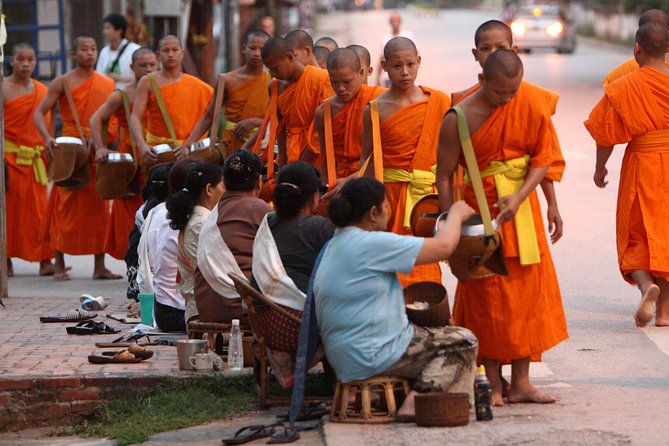
The optional 5:30 am departure is the most distinctive part of this experience. Alms giving is a Buddhist practice in which laypeople offer food to monks. It is not a performance put on for visitors, and your guide’s explanation matters here because the ceremony is easy to misunderstand if you treat it as a photo opportunity.
You can take part in the offering, since food for the ceremony is included, or watch quietly from a respectful distance. One useful approach is to stand back and observe rather than crowding the monks or using flash photography. The early morning light, quiet streets, and steady line of monks offer a glimpse of Luang Prabang’s religious life that a standard sightseeing loop cannot provide.
There is also a practical point to consider. Alms giving in central Luang Prabang can feel arranged for tourists, particularly along the best-known streets. That does not make it meaningless, but you should approach it with care. Follow your guide’s instructions, dress modestly, keep your voice low, and avoid blocking the procession.
After about 30 minutes, you move to the morning market for roughly 20 minutes. The market occupies quiet streets near the former Royal Palace and is largely finished by mid-morning. This short stop gives you a chance to see produce, prepared foods, and everyday trade before the town shifts into its daytime rhythm.
The market visit is brief, so do not expect time for a full breakfast or a long wander. Breakfast and lunch are not included. If you choose the early departure, plan to eat afterward or carry something suitable for the gap between the market and the main city sightseeing.
A few more trips around Luang Prabang worth a look
- Luang Prabang: UNESCO World Heritage City Highlights Tour
★ 4.6 · 201 reviews - Luang Prabang City Tour & Kuang Si Waterfalls
★ 4.5 · 87 reviews - Private Luang Prabang City Tour
★ 5.0 · 27 reviews
Riverview Park puts the old town in place
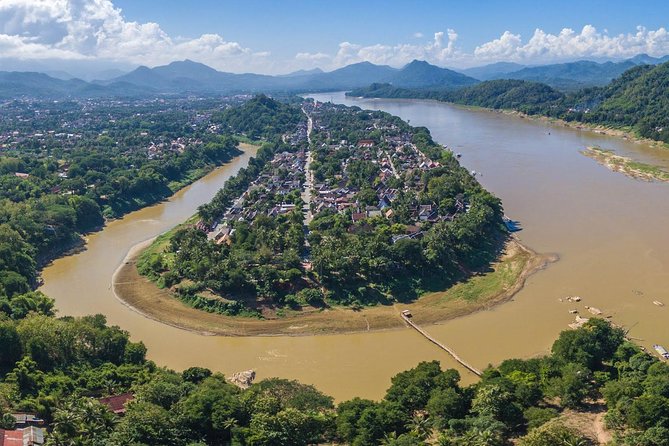
The main city portion begins at Riverview Park, at the tip of the peninsula where the Nam Khan meets the Mekong. This is a smart starting point because it gives you a simple map of Luang Prabang before you enter its temples and museum.
Your guide introduces the town from the meeting point of the two rivers, then leads you into the old quarter. That setting helps explain why the city feels compact and walkable. The tour uses an air-conditioned vehicle as part of the experience, but much of the central sightseeing involves walking between nearby sights and climbing stairs.
The river stop itself lasts about 10 minutes, so it is more of an orientation than a long scenic break. You will not have unlimited time for photographs here, but you get a useful sense of the peninsula’s shape and the relationship between the waterways and the old town.
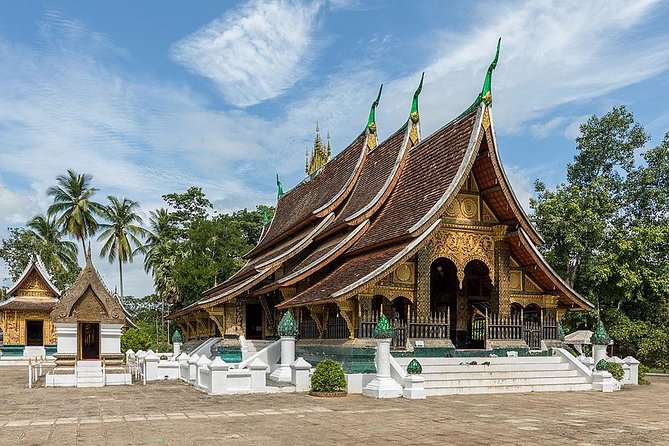
Wat Xiengthong shows Luang Prabang’s finest temple style
Wat Xiengthong is the major temple visit, with about 40 minutes set aside for the site. It was regarded as a ceremonial gateway to the city and served as a place where foreign dignitaries arrived and departed for centuries.
The temple’s importance is not only visual. It helps explain Luang Prabang’s role as a royal and religious center, and your guide can connect the buildings to the city’s broader story. Visitors with guides such as Bounlouam, Puang, or Sitthai have particularly valued the extra context about monastic life and Lao history.
You enter through the main gate after walking up steps. That detail matters if you have knee trouble or limited mobility. Several parts of the tour involve stairs, and some people have found the climbing harder than expected, especially in hot weather.
Allow yourself time to look closely at the temple buildings rather than rushing through for photographs. The scheduled 40 minutes is enough for a useful visit, but it does not leave much room for a slow architectural study if the group is moving on time.
Admission is not included. The stated combined cost for temple and museum entries is about 120,000 LAK, or roughly $6, though you should carry local cash because payment arrangements can vary.
Wat Sene adds a more personal monastic connection
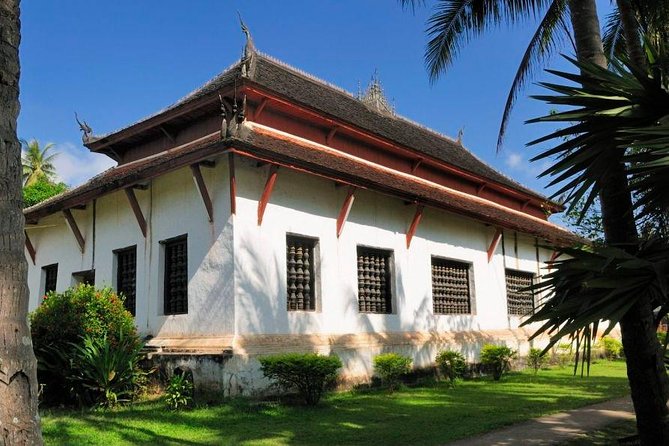
The next temple stop is Wat Sensoukharam, commonly called Wat Sene. The visit lasts about 15 minutes, so it is shorter than Wat Xiengthong, but it adds another angle to the city’s religious life.
Wat Sene was built in 1718 by Ki… The supplied tour details do not provide the full name, but the date alone places the temple within Luang Prabang’s long religious tradition. The temple also has a school for novice monks, which gives the stop a more direct connection to present-day monastic life.
A few guides on this tour have spent time as monks. That background can be especially useful here. You can ask practical questions about novice life, the role of temples, and the difference between seeing a temple as a monument and understanding it as a working religious place.
The stop is short, and the tour may move quickly if the group is larger or the weather is hot. If you care more about detailed temple study than covering several sights, you may find the schedule a little compressed.
Same town, a slower sort of day:
- Luang Prabang: Cruise to Pak Ou Caves & Kuang Si Waterfalls
★ 5.0 · 1,769 reviews - Luang Prabang: Cruise to Pak Ou Caves & Kuang Si Waterfalls
★ 4.8 · 1,360 reviews - Half Day Mekong Cruise to Pak Ou Caves (Morning / Afternoon)
★ 4.6 · 290 reviews - Luang Prabang: Afternoon Kuang Si Waterfalls & Sunset Cruise
★ 4.6 · 158 reviews
The Royal Palace Museum takes one full hour
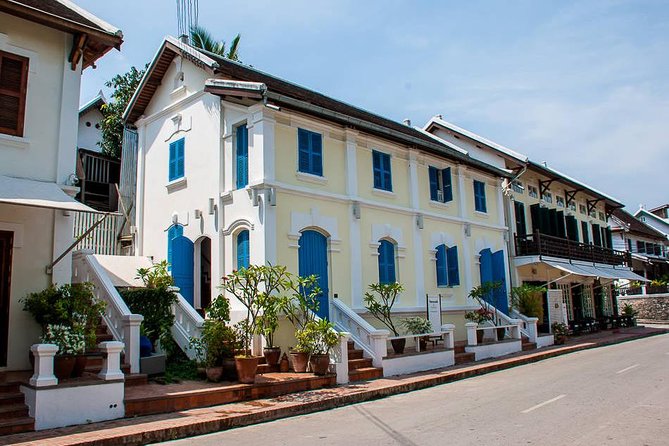
The Royal Palace Museum is the longest scheduled stop, at about one hour. The palace was built by French colonialists and later became the national museum. Its displays connect Lao royal life with the political changes that ended the monarchy.
A guide can make this stop far more useful than a quick self-guided walk through the rooms. The museum’s surviving contents are not always presented in a polished way, and some displays may feel dusty or lightly explained. That is where the tour earns its keep: you have someone to point out what you are seeing and place it within Luang Prabang’s past.
At the same time, an hour is a large portion of a four-hour tour. If museums are not your priority, you might prefer more time walking through the town. One person found the museum visit longer than necessary and would have chosen additional city sightseeing instead. That is a fair criticism, especially if you have already visited other royal museums in Southeast Asia.
The museum is closed on the last Thursday of every month. This is an important date to check before booking. One person arrived without being told in advance and missed the visit, so you should confirm the calendar if your trip falls near that day. The tour cannot offer the normal museum experience when the building is closed.
Mount Phousi ends the tour with a workout
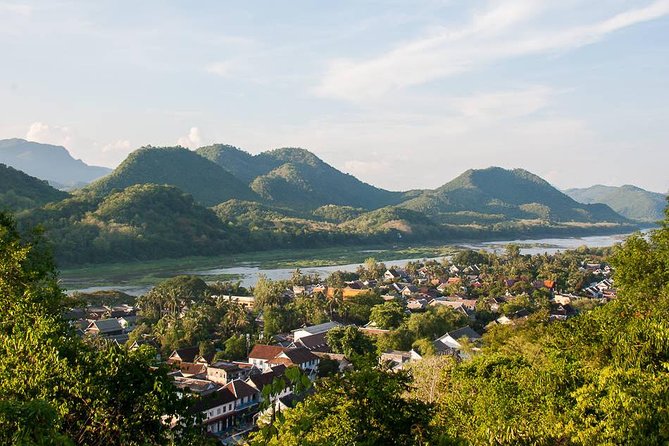
The final stop is Mount Phousi, which rises about 150 meters in the center of town. The tour allows around 30 minutes for the climb and the views from the top.
The reward is a broad view over Luang Prabang’s temples, the two rivers, and the surrounding mountains. It is a strong way to finish because you can finally see how compact the old town is after walking through its streets and religious sites.
Do not treat this as a flat sightseeing stop. The climb includes many steps, and the heat can make it feel harder. People with arthritis, bad knees, or low fitness may need more time than the schedule allows. The guide may be able to set a gentle pace, but the group still has a fixed tour length.
Wear shoes suited to stairs and bring water. The tour supplies water according to the information provided, but extra water is sensible in hot conditions. If the climb is a concern, ask about the route and timing before you commit.
What the $30 price really covers
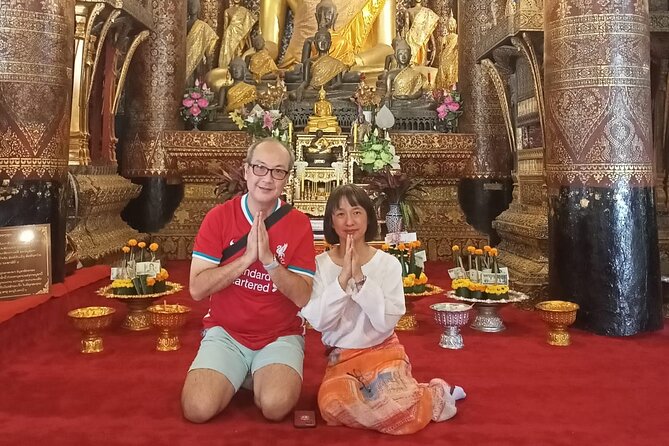
At $30 per person, this is a good-value introduction to Luang Prabang if you want one organized morning rather than several separate visits. The fee includes an English-speaking licensed local guide, an air-conditioned vehicle, and food for the alms-giving ceremony. Pickup is offered, and the activity ends back at the meeting point.
The price does not include breakfast, lunch, or admissions. Add about $6 for the temple and museum fees, then budget for your own food after the early start. The total remains reasonable for a four-hour guided experience, particularly if you get a small group and a guide who explains local religious life well.
The value depends heavily on your guide. Bounlouam has been praised for detailed explanations and a friendly manner. Sitthai has been singled out as a strong choice for the alms-giving portion. Puang, a former monk, has offered useful insight into temples and monastic life, while Latte has been described as friendly, professional, and informative.
Boon has also led well-received tours, though English clarity can vary between guides. One person found it necessary to listen closely, and another reported an uncomfortable experience when a guide repeatedly complained about Chinese visitors. That behavior is not appropriate, and it is worth keeping in mind that guide quality and attitude may differ.
Timing, transport, and group size
The full activity lasts about four hours. The early option begins at 5:30 am, followed by the market and the main city route. The exact flow can feel quick because the schedule includes seven stops, walking, temple visits, the museum, and a hill climb.
The meeting point is the Manifa Travel office on Sakkaline Road in Vat Sene Village, opposite Villa Santi Hotel. Pickup is offered, and the tour returns to the meeting point at the end. Confirmation is sent within 48 hours, subject to availability.
The highlights describe a maximum of 10 people, while the additional tour information says the maximum is 12. Either way, this is much smaller than a large coach tour. A tiny group can make the guide’s explanations more personal, while a full group may mean less time at each sight.
Wear clothing suitable for temples and bring cash for admissions. The tour details and practical feedback make it clear that dress rules and payment needs can vary from place to place. Modest clothing is the safe choice, and you should avoid arriving with only a card.
Who should book this half-day tour
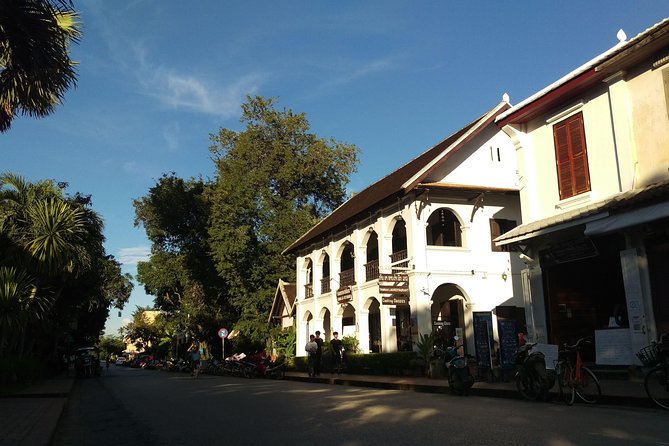
I would choose this tour for a first visit to Luang Prabang, especially if you have limited time and want the main central sights explained in one morning. It is also useful if you want an introduction to Buddhism, royal history, and the layout of the old town without arranging separate guides and transport.
The early departure suits people who want to see alms giving and the morning market before the heat builds. It is less suitable if you dislike early mornings, need a leisurely breakfast, or prefer to explore at your own pace.
The tour also works well for people who want a guide with direct monastic experience. Ask about your assigned guide if that matters to you, since names such as Puang, Bounlouam, Sitthai, Latte, and Boon have all been associated with this route.
You may want a different plan if your priority is photography, slow museum visits, or a detailed look at every temple. The schedule is designed to cover the highlights, not to provide long stays at each site. People with mobility limits should also think carefully about the steps at Wat Xiengthong and Mount Phousi.
Should you book it?
Book it if you want a well-priced first orientation to Luang Prabang, value local explanation, and can handle a 5:30 am start plus a moderate amount of walking and stairs. The combination of alms giving, the market, temples, palace, rivers, and Mount Phousi gives you a broad introduction in a short time.
Skip it if you want a slow, independent day or if the climb and early start would make the experience stressful. Before booking, check whether your date is the last Thursday of the month, confirm the museum plan, and allow about $6 extra for admissions. For many visitors, the strongest version of this tour is a small group led by a guide such as Bounlouam, Sitthai, or Puang, with enough time to ask questions and observe respectfully.
FAQ
Does the tour start at 5:30 am?
The 5:30 am departure is an option. It includes the alms-giving ceremony and the morning market before the main city sightseeing begins.
How long does the tour last?
The tour lasts approximately four hours.
What sights are included?
The route includes the alms-giving ceremony, the morning market, Riverview Park, Wat Xiengthong, Wat Sensoukharam, the Royal Palace Museum, and Mount Phousi.
Is the alms-giving food included?
Yes. Food for the alms-giving ceremony is included. Breakfast and lunch are not included.
Are temple and museum tickets included?
No. Temple and museum admissions are separate. The stated combined cost is 120,000 LAK, approximately $6.
Where does the tour start and finish?
The meeting point is the Manifa Travel office on Sakkaline Road in Vat Sene Village, opposite Villa Santi Hotel. The activity ends back at the meeting point.
Is hotel pickup available?
Pickup is offered, but the provided information does not specify which hotels are covered. You should confirm pickup details when booking.
How many people are in the group?
The highlights state a maximum of 10 people. The additional tour information gives a maximum of 12 travelers, so the exact group limit may depend on the operating arrangement.
Is the Royal Palace Museum always open during the tour?
No. The museum is closed on the last Thursday of every month and cannot be visited then. Check your date before booking.
Can I cancel for a full refund?
Yes, if you cancel at least 24 hours before the experience start time. Cancellations or changes made less than 24 hours in advance are not refunded or accepted.
Just added in Luang Prabang
- Luang Prabang: Pottery Workshop & Wat Chomphet cycling Tour★ 4.6 · 5 reviews
- Luang Prabang: Countryside Mountain Bike Tour with Lunch★ 3.6 · 7 reviews
- 3 Days The Plain of Jars and Xieng Khouan (Depart from Luang Prabang)★ 5.0 · 3 reviews
- Luang Prabang Local Market and Morning Food Tour with Drinks★ 5.0 · 6 reviews
- Luang Prabang Early Morning Alms Giving and Wet Market★ 4.5 · 5 reviews
- Luang Prabang: Weaving Workshop Half-Day Experience★ 5.0 · 9 reviews
- Laos Railway: Train Tickets Easily – Skip the Lines – No worries★ 5.0 · 9 reviews
- The Namkhan – Cooking Class★ 5.0 · 8 reviews
City Tours, compared.
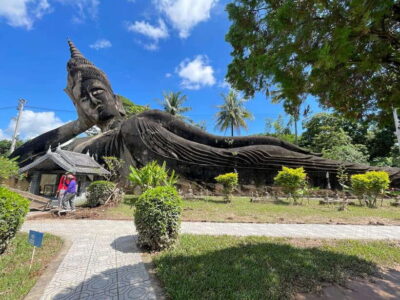
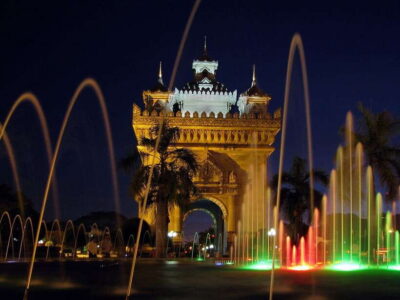
Vientiane City Highlights Tour with Buddha Park & Lunch
Read our review →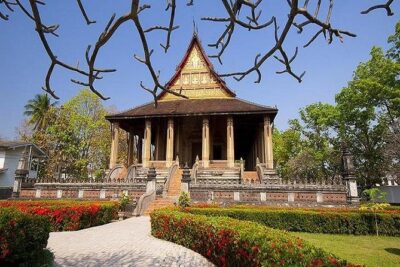
Private Tour: Vientiane City Tour Full Day with Buddha Park
Read our review →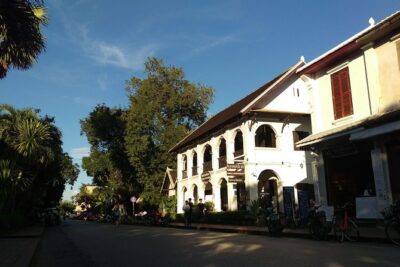
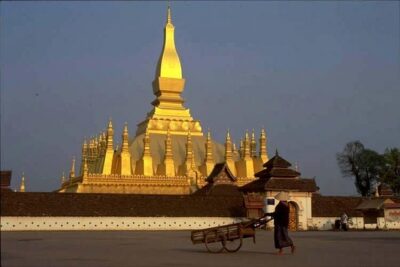
Browse the lists this tour appears in